




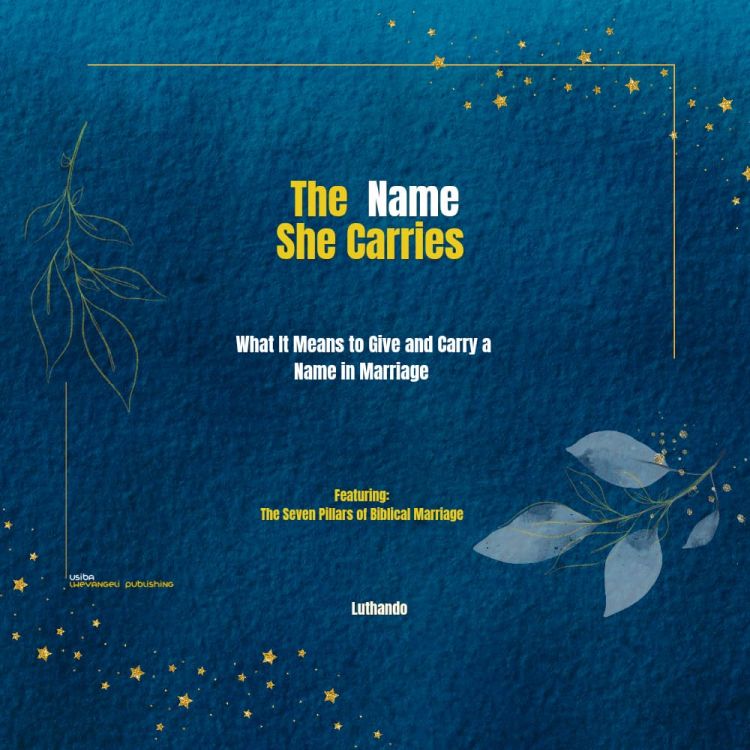
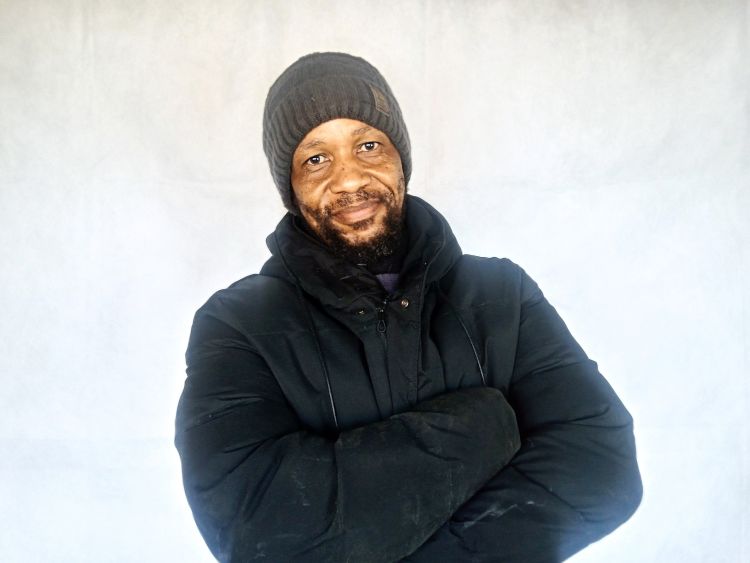
South African author and composer Luthando Mbengo has published The Name She Carries: What It Means to Give and Carry a Name in the Covenant of Marriage, a new Christian book challenging contemporary understandings of identity and womanhood within the marital covenant.
Released as Women’s Month draws to a close, the book enters a timely conversation about womanhood, identity, marriage and the responsibilities attached to the marital covenant.
Published by Usiba Lwevangeli Publishing, the book asks a question that is both simple and profound: What does a man actually give when he gives his name, and what does a woman actually carry when she receives it?
Mbengo’s answer forms the foundation of the book: the marital name is more than a social convention, legal formality or romantic gesture. Drawing extensively from Scripture, The Name She Carries presents the name given in marriage as a covenantal reality established by God at creation and reflected in the biblical relationship between Christ and His Church.
The book argues that understanding the marital name is essential to understanding the responsibilities, privileges and expectations of marriage itself. It develops seven dimensions of the name — increase, security, belonging and identity, authority, submission, glory, and jurisdiction — presenting each as both a provision and a responsibility within the covenant.
At the centre of the book is an argument that challenges both traditional distortions and contemporary assumptions about marriage. Mbengo examines the ways headship can be misunderstood as domination, the ways women’s identities can be erased under the language of marriage, and the growing tendency to redefine marriage as a relationship of completely symmetrical authority. His argument is that biblical marriage requires neither domination nor the erasure of personhood, but an ordered covenant in which husband and wife retain their distinct dignity, gifts and responsibilities.
The book consequently places significant responsibility on husbands as well as wives. A man who gives his name is not merely conferring a surname; he is assuming the covenantal responsibility represented by that name. The book challenges husbands to consider whether the name they give actually provides the security, belonging, provision, honour and covering that the covenant requires.
At the same time, wives are challenged to understand what it means to carry a name faithfully. The book presents name-bearing as stewardship rather than passive identification, arguing that a woman does not lose her individuality, gifts, intelligence, voice or calling by entering the covenant. Rather, her personhood is situated within a covenantal framework intended to give her identity, gifts and calling a home.
Importantly, The Name She Carries also addresses what happens when the covenant is broken or inadequately lived. The book gives particular attention to women who bear names that do not provide the substance those names are supposed to represent, arguing that a broken name can leave a woman carrying responsibilities and consequences she was never meant to bear alone.
The book is therefore intended not only for married couples, but also for people preparing for marriage, pastors, mentors and Christian communities seeking a deeper framework for understanding covenantal marriage. It includes reflection questions and a structured guide for use in pre-marital preparation, marriage enrichment and pastoral counselling.
Mbengo describes the purpose of the book not simply as providing another set of teachings about marriage, but as recovering an understanding that he believes has become obscured:
“Marriage is not failing because people love each other less. It is failing because they understand the name less.”
The Name She Carries is now published and available through Usiba Lwevangeli Publishing.
Please help us to keep on publishing news that brings Hope in Jesus:
>> Donate >> Become a Super Subscriber
VISIT OUR YOUTUBE CHANNEL: https://www.youtube.com/gatewaynews100
COMMENTING GUIDELINES
You are welcome to engage with our articles by making comments [in the Comments area below] that add value to a topic or to engage in thoughtful, constructive discussion with fellow readers. Comments that contain vulgar language will be removed. Hostile, demeaning, disrespectful, propagandistic and off-topic comments may also be moved. This is a Christian website and if you wish to vent against Christian beliefs you have probably come to the wrong place and your comments may be removed. Ongoing debates and repetitiveness will not be tolerated. You will also disqualify yourself from commenting if you engage in trolling.