


Originally published in Harbinger’s Daily and Worthy News
Iran’s judiciary announced that more than 3 000 citizens have been arrested in recent months on suspicion of cooperating with Israel, marking one of the regime’s broadest internal crackdowns since anti-government protests erupted earlier this year.
Judiciary spokesman Asghar Jahangir told Tehran’s semi-official Student News Network that 3,292 people had been detained on accusations of “collaboration with the enemy.” Of those, he said 684 were accused of carrying out “operational activities” for Israel, while 1,258 others were charged with political, propaganda, or media activity against the Islamic Republic.
Iranian authorities said 1 061 indictments have already been filed. Hundreds of assets belonging to suspects have also reportedly been confiscated by the state.
Last week, Iran’s judiciary claimed that property belonging to 100 people it called “traitors” had been seized in Isfahan province over alleged cooperation with Israel.
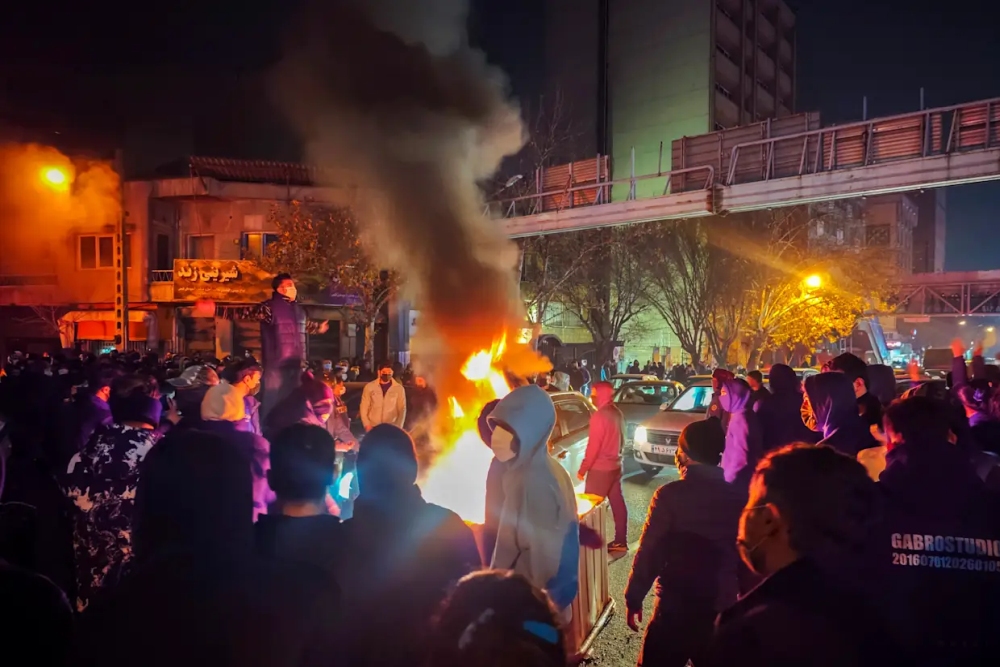
The wave of arrests comes as Tehran continues to suppress opposition following protests that began in January. During that earlier crackdown, more than 50 000 people were reportedly arrested as the regime moved to contain public anger over economic hardship, political repression, and growing opposition to clerical rule.
Since then, Iranian officials have intensified action against those they accuse of aiding Israel and the United States during Operation Roaring Lion, the joint US-Israeli campaign that struck Iranian military, nuclear, and security targets.
The Islamic Revolutionary Guard Corps accused Israel and the United States of trying to stir internal unrest while military operations were underway.
“While the Zionist enemy and the US are trying to invade Iran, they are simultaneously deploying mercenaries and spies to carry out riots as the next stage,” the IRGC said during the fighting.
But human rights groups say the regime is using the charge of espionage as a weapon against critics, protesters, dissidents, and ordinary citizens caught in the machinery of the Islamic Republic’s security state.
Rights groups have also accused Iranian authorities of using pressure, intimidation, and torture to extract false confessions, a long-standing practice in politically sensitive cases before Iran’s Revolutionary Courts.
The Wall Street Journal. reports that the Iranian regime has sharply escalated executions of political prisoners, using the gallows to warn a restless population that dissent will not be tolerated.
The Journal reported that at least 45 people have been executed in Iran this year on political charges, including accusations of espionage, spreading propaganda, and opposition activity. Most of those executions have taken place in the past three months, as Tehran seeks to project strength while entering nuclear negotiations with the United States. (The Wall Street Journal).
Among those hanged was Nasser Bakerzadeh, a 26-year-old mobile-phone shop owner from Urmia in northwest Iran. Bakerzadeh was executed after being accused of spying for Israel — a charge he denied and that his lawyer said lacked credible evidence.
According to the Journal, Bakerzadeh told fellow prisoners before his death that he hoped to return to his store and live an ordinary life. Instead, he became one of the latest victims of a regime that human-rights advocates say is increasingly using espionage allegations as an elastic weapon against political opponents.
The crackdown has unfolded as Tehran begins talks with Washington following a memorandum of understanding that could provide the regime with financial relief through the easing of sanctions on oil exports. Negotiations that began in Switzerland are aimed at curbing Iran’s nuclear ambitions in exchange for broader sanctions relief, though the talks remain complicated by ongoing fighting in Lebanon between Israel and Iran-backed Hezbollah.
Human-rights groups say Iran’s revolutionary courts have rushed political cases forward with grave due process violations. Defendants are often denied independent counsel, convicted through coerced confessions, and prosecuted under broad religious and political charges such as “enmity against God” and “corruption on Earth.”
The Journal also highlighted the case of Mehrab Abdollahzadeh, a young barber from near Urmia who was arrested after women’s-rights protests that began in 2022. He was accused of killing a member of the Basij militia, a force controlled by Iran’s Islamic Revolutionary Guard Corps and frequently used to suppress domestic opposition.
Abdollahzadeh reportedly said his confession was forced through torture and threats. At trial, he said surveillance footage and witness testimony placed him away from the scene of the killing. He was hanged one day after Bakerzadeh.
The two men fit a pattern identified by rights groups: many of those facing execution or long prison terms are young men from ethnic minority communities, particularly Kurds. Yet the current wave of repression has reached across Iranian society, from Tehran to provincial towns.
The rise in political executions has deepened concern for thousands of Iranians still imprisoned after recent protest movements. Rights advocates say the punishment often extends beyond the prisoners themselves, with families facing property seizures, crushing bail demands, and other financial pressure designed to break dissent at the household level.
For Tehran, the message appears unmistakable: even as the regime seeks diplomatic breathing room abroad, it is tightening its grip at home.
Underground church grows despite persecution
Iran’s crackdown is not limited to political protesters. Christians — especially converts from Islam — remain under severe pressure from a regime that views house churches and evangelism as threats to national security.
Over the past two decades, Iran has also become home to one of the most striking underground church-growth movements in the world. Operation World notes that from roughly 500 Muslim-background believers in 1979, some estimates now place the number of Iranian Christians at more than one million inside Iran.
That growth has come at a heavy cost. Open Doors reports that converts from Islam are “most in the firing line,” with house churches commonly raided by authorities. Article18 reported that Iranian Christians were sentenced to a combined 263 years in prison in 2024, a sixfold increase from the prior year.
Believers have been arrested, interrogated, imprisoned, and accused of propaganda or acting against national security for gathering in homes, possessing Christian materials, or sharing their faith. Historical Armenian and Assyrian Christian communities are recognised in limited ways, but ministry to Muslim-background Iranians remains heavily restricted.
Please help us to keep on publishing news that brings Hope in Jesus:
>> Donate >> Become a Super Subscriber
VISIT OUR YOUTUBE CHANNEL: https://www.youtube.com/gatewaynews100
COMMENTING GUIDELINES
You are welcome to engage with our articles by making comments [in the Comments area below] that add value to a topic or to engage in thoughtful, constructive discussion with fellow readers. Comments that contain vulgar language will be removed. Hostile, demeaning, disrespectful, propagandistic and off-topic comments may also be moved. This is a Christian website and if you wish to vent against Christian beliefs you have probably come to the wrong place and your comments may be removed. Ongoing debates and repetitiveness will not be tolerated. You will also disqualify yourself from commenting if you engage in trolling.