


Freedom of Religion South Africa released a statement today rejecting a claim by the CRL Rights Commission that the exposure of systemic corruption within the Department of Home Affairs reinforces the commission’s call for state registration of pastors.
The CRL says, in a statement released on Tuesday, that Home Affairs corruption problems identified in a report by the Special Investigation Unit (SIU) “could have been avoided through a self-regulation mechanism that involves the registration of pastors, vetting as required by the Children’s Act 38 of 2005, and adherence to a code of conduct”.
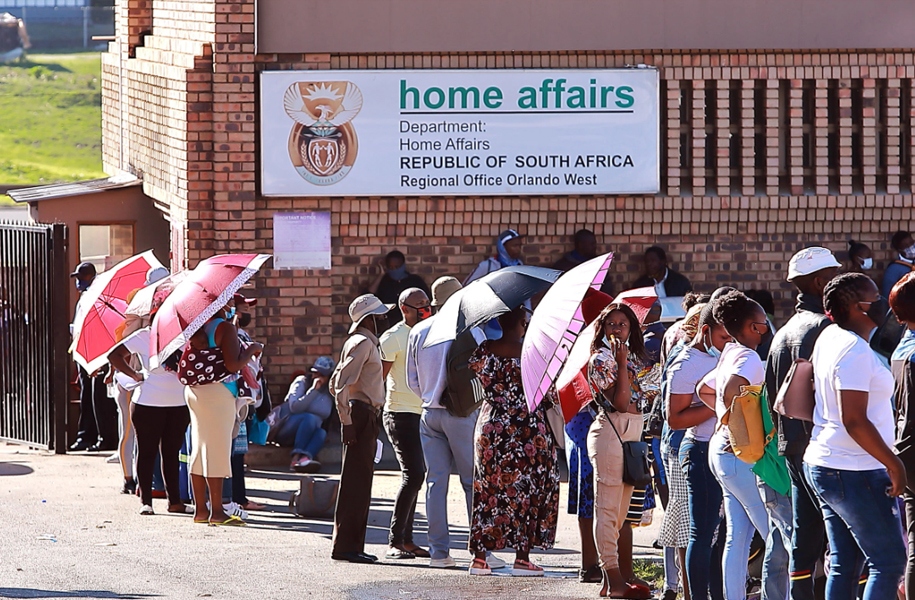
The corruption exposed by the SIU includes the illegal sale of visas and permits to foreign clergymen.
FOR SA says in its statement that the SIU report, describing an immigration system treated “as a marketplace”, where permits and visas are allegedly sold for cash, officials abuse their authority, and verification systems are bypassed, demands accountability, reform, and integrity within the state.
“However, they neither call for nor justify state regulation of religion. Within hours of the SIU report’s release, the CRL Rights Commission suggested that the findings reinforce its long-standing call for the registration of pastors and the creation of a professional regulatory body for religious practitioners. That leap is misplaced,” says FOR SA.
“The SIU report exposes corruption inside Home Affairs,” says Michael Swain, Executive Director of FOR SA. “It does not expose a structural failure of religion. The solution to corruption in Home Affairs is to fix Home Affairs — not to place faith under state control.”
The SIU found state corruption — not a religious governance crisis
The FOR SA statement continues: “The corruption described by the SIU occurred within the Department of Home Affairs. It involved officials abusing their positions, syndicates manipulating internal systems, and serious failures in verification and oversight.
“The SIU’s recommendations are directed at strengthening Home Affairs systems: vetting officials, improving system integration, enhancing verification processes, and tightening compliance enforcement. Nowhere does the SIU recommend regulating religion. Nowhere does it call for licensing pastors. Nowhere does it suggest that a professional body for clergy would have prevented bribery inside the department. The institutional failure identified is one of public administration, not religious governance.
Religion is not a state-licensed profession
“The CRL has again attempted to compare religious practitioners with regulated professions such as doctors, lawyers and accountants. This comparison is fundamentally flawed. Doctors and lawyers operate in professions where, for clear public policy reasons, only registered and qualified practitioners may perform certain acts. There is a defined body of technical knowledge. There are measurable competency standards. Public safety depends on minimum qualifications.
“Religion is constitutionally different.
“In a constitutional democracy, religious belief is protected precisely because it is not confined to a single body of knowledge or uniform doctrine. Our constitutional framework protects diversity, minority beliefs, and unconventional expressions of faith. The State cannot prescribe a theological curriculum or define what constitutes a legitimate calling.”
“If the State can decide who qualifies as a religious leader,” says Swain, “then religious freedom ceases to be a fundamental right. Instead, it is reduced to a conditional privilege granted by the State.”
“A compulsory professional body for ‘all religious practitioners’ would inevitably require someone to determine acceptable doctrine, acceptable training, or acceptable credentials. This is not accountability. It is state control of religion.
The religious sector is not unregulated
“Some have suggested that the religious sector lacks — or is seeking to avoid — accountability. This ignores reality. Across South Africa, faith communities operate within structured denominational systems: synods, councils, assemblies, elders’ boards, episcopal structures, and disciplinary mechanisms. Umbrella bodies and ministerial fraternals provide additional layers of oversight.
“In addition, many religious organisations are registered as Non-Profit Organisations, NonProfit Companies, trusts or charities. They submit annual returns. They are subject to fiduciary duties and oversight. They comply with the demands of diverse and numerous laws and governance standards. They must comply with tax law, labour law, municipal regulations, zoning requirements, building codes, and child-protection legislation.
“Religious freedom has never been a shield for criminal conduct. Those who break the law are subject to the full force of the criminal justice system. South Africa already has extensive legal tools to deal with fraud, sexual offences, human trafficking, immigration violations and financial misconduct. The existing law just needs to be enforced properly and timeously. When this does not happen, justice is delayed or denied, as the Omotoso case and the ongoing Bushiri matter show.”
“The existence of criminals does not justify regulating an entire sector,” Swain says. “It justifies and emphasises the urgent need to enforce the laws we already have.”
Voluntary professionalisation already exists
For SA continues: “Where parts of the religious community wish to professionalise, they already do so voluntarily. Bodies such as the Association of Christian Religious Practitioners (ACRP) operate as professional bodies for those who choose to affiliate. They establish standards, designations, codes of ethics and disciplinary mechanisms without coercion.
“Likewise, organisations such as the South African Community of Faith-Based Fraternals and Federations (SACOFF) reflect significant existing networks of accountability within the faith sector. That is the correct model in a constitutional democracy: voluntary association, not state-enforced uniformity.
“It is also important to recognise that the CRL already has substantial powers under its enabling legislation. It may establish and maintain databases of religious organisations, conduct research, facilitate education and communication, and engage with relevant state organs. If the CRL wishes to improve engagement, publish compliance guidance, or collaborate with umbrella bodies and voluntary professional organisations, it can do so without any new legislation.”
“Before calling for more control,” Swain adds, “the CRL should fully use the powers it already has. Education and coordination are constitutional. Licensing belief is not.”
Fix Home Affairs — protect religious freedom
“The SIU report should serve as a wake-up call about corruption within state systems. It should lead to stronger internal controls, more robust verification processes, and improved administrative integrity within Home Affairs. What it should not become is a pretext for expanding state control over religion.
“South Africa’s constitutional architecture is clear: The state protects freedom of religion. It does not define it. It must enforce criminal law and eradicate corruption. It does not determine theology. It regulates public administration. It does not license belief. This is why state regulation of religion is constitutionally unjustifiable: because it invariably opens the door to state interference in doctrine.
“FOR SA remains committed to accountability, ethical conduct, and lawful compliance across the religious sector. We support strong enforcement against criminality wherever it occurs. We support reform within state institutions. However, we cannot support measures that erode constitutional freedoms under the guise of reform. The solution to corruption in Home Affairs is to fix Home Affairs — not to regulate religion.”
The full statement released by the CRL on Tuesday reads: “The Commission for the Promotion and Protection of the Rights of Cultural, Religious and Linguistic Communities welcomes the report of the Special Investigating Unit (SIU) released on 23 February 2026.
“The CRL Rights Commission reiterates that the SIU report reinforces its call for accountability in the religious sector. The Commission has maintained that these problems could have been avoided through a self-regulation mechanism that involves the registration of pastors, vetting as required by the Children’s Act 38 of 2005, and adherence to a code of conduct.
“The Commission maintains that, as with professions such as doctors (HPCSA), lawyers (LPC), nurses (SANC), social workers (SACSSP), and traditional healers (THPCSA), etc., which are overseen by regulatory councils, the religious sector also requires a self-regulatory council to ensure accountability and ethical conduct.
“In that regard, if a Christian council was in place, the Department of Home Affairs would have had a body from which to source guidance and advice. Consequently, it would not have been approving illegal foreign nationals who falsely claimed to be bringing scarce skills into the country.”
Please help us to keep on publishing news that brings Hope in Jesus:
>> Donate >> Become a Super Subscriber
VISIT OUR YOUTUBE CHANNEL: https://www.youtube.com/gatewaynews100
COMMENTING GUIDELINES
You are welcome to engage with our articles by making comments [in the Comments area below] that add value to a topic or to engage in thoughtful, constructive discussion with fellow readers. Comments that contain vulgar language will be removed. Hostile, demeaning, disrespectful, propagandistic and off-topic comments may also be moved. This is a Christian website and if you wish to vent against Christian beliefs you have probably come to the wrong place and your comments may be removed. Ongoing debates and repetitiveness will not be tolerated. You will also disqualify yourself from commenting if you engage in trolling.