


In many African cultures, including those of the Xhosa, Tsonga and Sotho peoples of South Africa, traditional circumcision marks the transition from boyhood to manhood. Among the Xhosa, this rite of passage is known as “ulwaluko”.
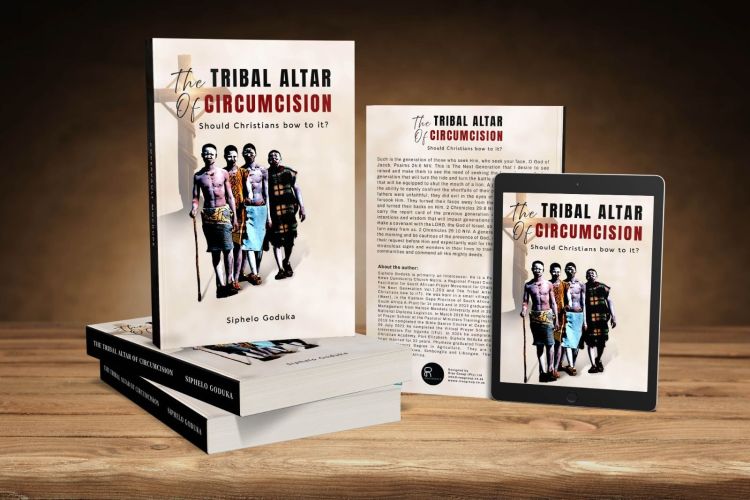
A Gqeberha pastor and author, Siphelo Goduka, is now challenging the spiritual foundations of this practice in his newly-published book, The Tribal Altar of Circumcision – Should Christians Bow to It?, which has already sparked debate within Christian and traditional communities.
Goduka, an intercessor, lecturer and pastor, has been in ministry for several years and has authored four books. Married for 24 years and a father of three daughters, he says his latest work addresses what he believes are spiritual covenants formed during traditional initiation ceremonies.
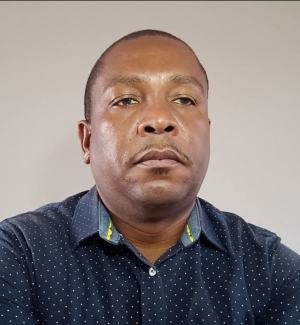
According to Goduka, ulwaluko is not merely a cultural tradition but a ritual involving a blood covenant linked to ancestral worship — something he argues is incompatible with Christian faith.
“Ulwaluko is one of the rituals that requires a blood covenant and is deeply connected to ancestral worship,” he said. “Christians need to understand what they are participating in.”
He claims that many young men return from initiation schools in a worse condition than when they entered.
“They come back plagued by lust, alcoholism and reckless behaviour,” Goduka said. “This happens because they are unknowingly introduced to spiritual forces of darkness.”
Goduka, who is a Xhosa man himself, also disputes the idea that manhood can be instilled through a short initiation period.
“You cannot teach a boy to be a man in three weeks,” he said. “Manhood takes time, guidance and the wisdom of a present father.”
He points to widespread fatherlessness within Xhosa communities, saying many fathers are absent from their children’s lives but are seen at initiation ceremonies to fulfil what he describes as generational covenants.
While circumcision is featured prominently in the Bible, Goduka argues that some in the Church have misinterpreted Scripture. He notes that in the Old Testament, circumcision was a covenant between God and Abraham, but says this should not be equated with African traditional practices.
He references New Testament teachings, particularly those of the Apostle Paul, who taught that faith in Jesus Christ — not physical circumcision — is the basis of salvation.
“Neither circumcision nor uncircumcision means anything; what counts is the new creation,” Goduka quoted from Galatians 6:15.
He explained that the Apostle Paul, who himself circumcised Timothy before sending him to minister among the Jewish people, did so not as a religious requirement, but to prevent Timothy and the message he carried from being rejected (Acts 16:3). According to Paul, the act was a cultural concession, not a theological necessity.
Despite some positive reception, Goduka says his message has been rejected by many Xhosa traditionalists, including some Christian leaders.
“Some pastors are afraid to speak out because they fear losing members,” he said. “The Church is lowering God’s standards to accommodate culture”. He further observed that not all leaders may share this understanding and said that those who do have a responsibility to educate others within the wider Christian — specifically Xhosa — community.
In recent years, some churches have adopted what is referred to as “ulwaluko lwecawe” (initiating the church way), where certain traditional rituals such as goat slaughter, alcohol and ancestral invocation are excluded when the initiate returns home, making this celebration more like a church service. Goduka rejects this approach, saying it does not address the spiritual foundations of the ritual.
“There is nothing called Christian circumcision.” he said.
Goduka acknowledges health and safety concerns surrounding initiation schools, particularly following reports of injuries and deaths. Recently the Minister of Cooperative Governance and Traditional Affairs, Velenkosini Hlabisa, confirmed the death of 48 initiates during the 2025 summer initiation season.
Goduka said he strongly supports medical circumcision for its recognised health benefits. He says young men should circumcise only for health and hygiene purposes.
Nationally, circumcision has increasingly been promoted as a public health intervention, particularly in efforts to reduce HIV transmission, shifting the conversation beyond culture and religion.
Goduka’s book launch will take place on April 5 at Bluewater Bay Community Church, 70 Hillcrest Drive, Gqeberha. The book is currently available directly from Him — at +27 79 491 2043 or https://www.facebook.com/siphelo.goduka.37
Please help us to keep on publishing news that brings Hope in Jesus:
>> Donate >> Become a Super Subscriber
VISIT OUR YOUTUBE CHANNEL: https://www.youtube.com/gatewaynews100
COMMENTING GUIDELINES
You are welcome to engage with our articles by making comments [in the Comments area below] that add value to a topic or to engage in thoughtful, constructive discussion with fellow readers. Comments that contain vulgar language will be removed. Hostile, demeaning, disrespectful, propagandistic and off-topic comments may also be moved. This is a Christian website and if you wish to vent against Christian beliefs you have probably come to the wrong place and your comments may be removed. Ongoing debates and repetitiveness will not be tolerated. You will also disqualify yourself from commenting if you engage in trolling.