




The US Commission on International Religious Freedom (USCIRF) released its sobering 2026 Annual Report on Wednesday documenting the worsening global crisis in freedom of religion or belief throughout 2025. The bipartisan commission, mandated by Congress under the International Religious Freedom Act, cataloged egregious violations — including state-sponsored repression, extremist violence, attacks on houses of worship, forced conversions, and transnational repression — that spanned across 29 countries.
The report, far from being purely analytical, painted a picture of escalating persecution that demands urgent US action. And at the heart of USCIRF’s report was its recommendations:
- Urge the State Department to designate 18 countries as Countries of Particular Concern (CPCs) for particularly severe abuses, such as torture, prolonged detention, genocide-like policies, and destruction of religious sites.
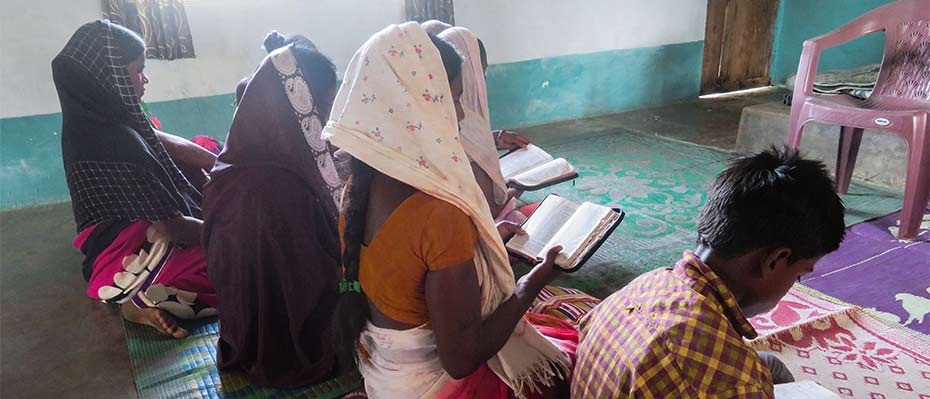
- New additions include Afghanistan (Taliban’s strict enforcement targeting minorities), India (anti-conversion laws fueling mob violence), Libya (morality policing and persecution), Syria (post-regime change sectarian massacres against Alawites, Druze, and Christians), and Vietnam (intensified crackdowns on independent faiths).
- Redesignations cover longstanding violators like Burma (Myanmar), China, Cuba, Eritrea, Iran, Nicaragua, Nigeria (designated by President Trump in October 2025), North Korea, Pakistan, Russia, Saudi Arabia, Tajikistan, and Turkmenistan.
The report also pushed for 11 countries on the Special Watch List (SWL) for severe — but not yet “particularly severe” — violations, maintaining Algeria and Azerbaijan while adding Egypt, Indonesia, Iraq, Kazakhstan, Kyrgyzstan, Malaysia, Qatar, Turkey, and Uzbekistan amid backsliding in registration laws, blasphemy enforcement, and minority discrimination. And beyond states, USCIRF highlighted Entities of Particular Concern (EPCs) like the Rapid Support Forces in Sudan, alongside redesignations of Al-Shabaab, Boko Haram, Houthis, ISIS affiliates, and the Taliban.
USCIRF noted escalations in post-conflict/transition settings, such as Syria after its regime change lead to sectarian killings. There are also ongoing issues like blasphemy laws, forced conversions, mob violence (India, Pakistan), “sinicization” and mass detention in China (Uyghurs, Christians, Tibetans), and extremist attacks in Nigeria/Africa. And in addition to all of these concerns are the rising rates of anti-Semitism, targeting of religious leaders/clergy, transnational repression, and correlations between religious freedom abuses and mass atrocities.
In a recent “Washington Watch” interview with Family Research Council President Tony Perkins, USCIRF Chair Vicky Hartzler referred to the findings as heartbreaking, yet noted that they provide an opportunity for American leadership to act. “Sadly, there is a lot of persecution around the world,” she said, stressing that the 18 recommended CPCs represent “the worst violators,” including new entries like Syria and Libya. She urged integrating religious freedom into US diplomacy — tying it to trade deals, military aid, and foreign policy — because when the conversation happens, it leads to some people being freed from prison and even a change in some countries’ laws. This, Hartzler stated, is “our ultimate goal.”
Perkins reinforced the link: nations respecting this “first freedom” of religious liberty often enjoy greater economic opportunity and social stability, meaning “it’s in the interest of the United States to promote religious freedom abroad.”
As the conversation deepened, Hartzler and Perkins spotlighted regions where persecution rages unchecked or accelerates with alarming speed — specifically noting how it’s often met with insufficient international response.
Hartzler expressed disappointment with Syria’s transitional government under interim President Ahmed al-Sharaa for its glaring failure to safeguard religious minorities in the wake of Bashar al-Assad’s fall. Although the transitional authorities are not always the direct perpetrators, evidence suggests many attackers operate with alignment or tacit tolerance from those in power, compounded by a complete absence of prosecutions, meaningful accountability, or robust protective measures for vulnerable communities.
Hartzler also drew attention to Turkey’s inclusion on the Special Watch List, citing its aggressive expulsion of American missionaries and pastors, severe restrictions on non-Sunni faiths, and tight government control over religious institutions. “There [are] no seminaries other than the Sunni Muslim religion, and it’s very much controlled by the government — what you can preach, what you can do,” she explained. “It’s very oppressive and needs to change.” Perkins drew a parallel to Nigeria, where the government may not directly orchestrate the violence but consistently fails to intervene or halt it, allowing extremist groups to terrorize religious minorities with impunity.
These examples underscore a broader, urgent reality: religious freedom is not merely a moral imperative but a strategic one for global stability. The USCIRF 2026 Annual Report lays bare a world where violations are intensifying — from state-engineered repression in authoritarian regimes to unchecked extremism in transitional or fragile states. And yet, it also offers a clear roadmap for US leadership. By heeding the commission’s recommendations, including timely CPC and SWL designations, integrating religious freedom into all facets of diplomacy, and prioritizing accountability for perpetrators, the United States can help secure the release of the imprisoned, protect the vulnerable, and foster societies where this foundational freedom thrives.
In doing so, experts argue that America not only upholds its values but advances its own security and prosperity in an interconnected world — especially before the crisis deepens further.
Please help us to keep on publishing news that brings Hope in Jesus:
>> Donate >> Become a Super Subscriber
VISIT OUR YOUTUBE CHANNEL: https://www.youtube.com/gatewaynews100
COMMENTING GUIDELINES
You are welcome to engage with our articles by making comments [in the Comments area below] that add value to a topic or to engage in thoughtful, constructive discussion with fellow readers. Comments that contain vulgar language will be removed. Hostile, demeaning, disrespectful, propagandistic and off-topic comments may also be moved. This is a Christian website and if you wish to vent against Christian beliefs you have probably come to the wrong place and your comments may be removed. Ongoing debates and repetitiveness will not be tolerated. You will also disqualify yourself from commenting if you engage in trolling.