


CRL chair’s recent interviews expose state-control agenda of Section 22 process, despite claims that it is an open, voluntary dialogue, says FOR SA in the article below
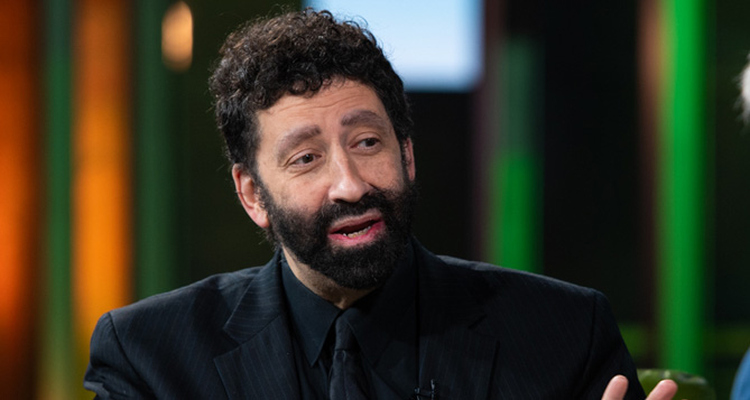
At the recent CRL Press conference on March 25, 2026, Rev John Maloma, the newly appointed chair of CRL’s Section 22 Committee for the Christian sector, assured that the current Section 22 process is an open, voluntary consultation — nothing more than a sincere effort to listen to the Church and co-create a framework for accountability. He urged religious leaders to understand that this is not about imposition but participation. It is not about control but cooperation. It is not about State regulation but self-governance. He presented it as a moment for unity, a national conversation, an invitation to shape the future together.
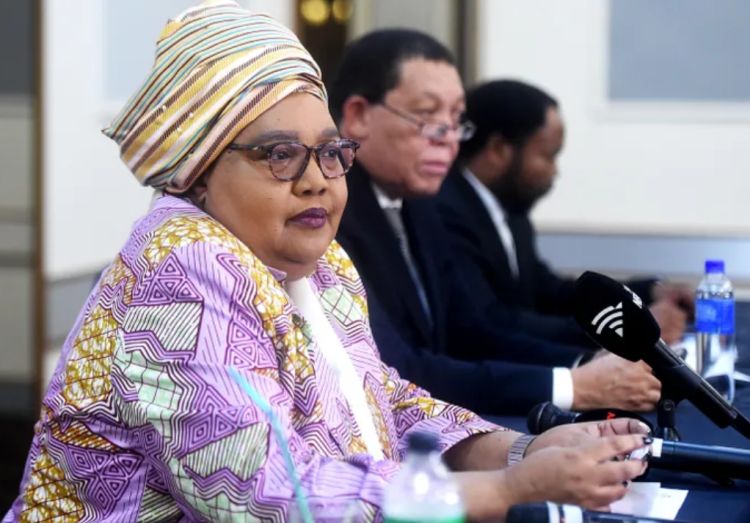
However, it is difficult (if not impossible) to sustain the suggestion that the present Section 22 process is merely an open-ended consultation about whether any regulatory framework should exist. In a televised interview on SABC News on Thursday, April 2, 2026, the CRL chair, Thoko Mkwanazi-Xaluva, stated the CRL’s position explicitly when she made the following statement: “There must be a council for the religious sector, which will then mean there must be an Act [of Parliament] and a council formed out of that Act.”
This cannot be treated as simply a passing remark. It does not depict legislation as merely one possibility under consideration. It is a clear articulation of legislative intent. An Act of Parliament is not guidance; it is a binding law. A Council created by that Act would not be a forum, but a statutory body, a State-created and State-empowered structure exercising authority over the religious sector.
The chair then went further, declaring that State intervention should not be limited to whether something is legal or not, but also whether it is ethical. She explained that a council is necessary to handle such issues and that it is essential to protect congregants, even from themselves.
At that moment, the shift had already occurred. The focus moved from enforcing law to regulating ethics, and from addressing harm to asserting sector-wide authority. It is no longer confined to prosecuting and punishing illegal conduct. Instead, it now includes what is described as “unethical conduct”. This is a vital distinction and a significant escalation. Illegal conduct can and should be prosecuted under existing laws. However, ethical conduct is much more subjective, often influenced by belief, doctrine, and conviction.
It must be clearly stated that no one in the faith sector is arguing in favour of or trying to justify unethical behaviour. It should go without saying that the State can (and has a duty to) enforce criminal or other laws where boundaries are crossed and abuse or misconduct occur. However, once the State claims authority to regulate ethics within religion, it inevitably intrudes into the domain of belief itself. That is a line the Constitution does not permit it to cross. To do so would amount to the State determining acceptable belief and practice, which is incompatible with constitutional protections for religious freedom.
From assurances to legislative design
If the SABC interview revealed the intention, the subsequent NewzRoom Afrika interview set out the design. In that interview, the CRL chair was even more explicit. She confirmed that the proposed council must be legally empowered like the Legal Practice Council and other statutory bodies formed by an Act of Parliament. She explained that, like other professions, such a system would determine who may practice, and that those who fail to comply would be told by their peers that they “cannot be one of us”.
Most strikingly, she stated that: “[your] peers will say your freedom of religion starts here and ends there”. She dismissed the argument that existing laws are enough, describing it as “scratching where it does not itch”. She highlighted extreme cases of abuse, arguing that people are vulnerable, that they follow religious leaders who claim divine authority, and that, without external intervention, such situations will persist. She asserted that, with a council in place, such individuals could have been halted years earlier.
Taken together, these statements clearly point to a legislative framework and a system of State control of religion.
A consultation in name only
At first glance, the CRL chair’s statements seem to contradict those made on March 25 by the Section 22 Committee Chair, Rev John Maloma. He assured the public that this committee is “not here to impose, but to listen… not to dictate, but to discern”, presenting the process as open and voluntary. Subsequent letters of invitation state that the aim is to develop a voluntary, self-regulatory framework for the Christian sector, an initiative by the Church, for the Church.
However, the mandate given to the Section 22 Committee tells a very different story. The Final Draft Christian Sector Self-Regulatory Framework clearly supports the CRL chair’s call for a legislative framework. It provides for a Council for Ethics and Accountability, the registration of religious institutions and leaders, a binding Code of Conduct developed by the CRL, and a “Seal of Good Standing” for those who comply. Sanctions for non-compliance include deregistration and public notification. These are not features of voluntary self-regulation. They are the defining characteristics of a regulatory regime. This indicates that the purpose of the consultations the Section 22 Committee is inviting is not to determine whether such a framework should exist, but to secure its endorsement.
This raises serious concerns about transparency and good faith. The true purpose of the process is not being fully or accurately disclosed. It is not an open-ended consultation. Instead, the consultation appears aimed at shaping and garnering support for a predetermined legislative framework rather than addressing the fundamental question of whether legislation or a statutory council should exist at all.
The false justifications
In defending this agenda, the CRL Chair has put forward arguments that may seem persuasive, but they do not withstand close scrutiny. The first is the claim that there is no law in South Africa to combat abuses in the religious sector. That is simply false. South Africa already has a comprehensive legal framework capable of addressing harm wherever it occurs. Criminal law covers assault, fraud, coercion, and abuse. The Children’s Act and the Domestic Violence Act provide strong protections for vulnerable individuals. Health regulations, education standards, and governance frameworks are equally applicable. The issue is not the absence of law but rather the consistency and effectiveness of its enforcement, along with a lack of awareness and education about legal rights and responsibilities.
The second justification relates to the fundamentally flawed comparison with regulated professions such as law, medicine, and traditional healing. The key difference is that law and medicine are professions with clearly defined bodies of knowledge and State-recognised scopes of practice. Religion, on the other hand, is a constitutionally protected freedom. The former may be licensed and regulated, while the latter must be safeguarded. Even the example of traditional health practitioners does not support the CRL’s position. That framework regulates specific practices within a public health context, but it does not create a general system of state oversight over belief, doctrine, or religious life.
A united position on accountability
Those raising concerns about this process are not opposing accountability, nor are they advocating for unethical behaviour. They are challenging the form of accountability being proposed and its constitutional implications. On the contrary, there is widespread and consistent agreement across the faith community that abuse, exploitation, and harm must be addressed decisively.
From the outset, FOR SA has consistently advocated for this. We support religious organisations and faith leaders participating in voluntary umbrella organisations like SACOFF. We promote the adoption of the Religious Freedom Charter, its Explanatory Notes and its corresponding Code of Conduct, all developed by the sector itself. We argue for the effective enforcement of existing laws to protect the vulnerable. The CRL already has powers under Section 5 of its founding CRL Act 2002 to investigate, monitor, and refer matters for enforcement of existing laws where necessary. We also encourage the CRL to fulfil its current mandate by using its educational powers to inform, equip, and support the religious sector.
South Africa does not require new laws to regulate religion. It needs consistent enforcement of existing laws, complemented by voluntary, sector-led accountability mechanisms that safeguard constitutional freedoms. This is the approach outlined in FOR SA’s “Alternative Solutions” framework. It is practical, effective, and fully aligned with the constitutional order. Our opposition is not to accountability itself, but to a legislative framework that will neither resolve the so-called problem nor respect the constitutional right to religious freedom — potentially limiting, even violating, and reshaping it.
No more ambiguity: a call to Government
The recent interviews have clarified the issue significantly. They make clear that the proposal under discussion is not limited to voluntary internal reform, but also includes the distinct possibility of legislation and a council with legal authority. Many have long-suspected that the CRL chair intends to introduce legislation regulating religion, and this has now been openly confirmed. It is no longer implied. It is no longer denied. It is openly declared.
We are now in a moment that demands clarity. Government leaders and political structures can no longer remain silent. Several statements have previously been made indicating that there is no support for legislation of this kind. However, if that is indeed the position of the GNU and various political parties (and the ANC in particular), then it must now be clearly and publicly affirmed. There can be no more ambiguity. No more fence-sitting. Silence at this point will reasonably be interpreted as acquiescence. The question is simple: Do you support this legislative agenda, or do you not? And if you do not, what aligned action will you take to ensure that this does not move forward?
In particular, the COGTA Portfolio Committee (PC) must act swiftly and clearly. There are ongoing legal challenges in court regarding the validity, composition, and mandate of the Section 22 Committee itself. If the courts rule in favour of the South African Church Defenders (SACD) and the Muslim Lawyers Association cases, then any output from the Section 22 Committee is at risk of being overturned. That would be an inexcusable waste of public funds.
We therefore urge COGTA PC to clearly state that no report, recommendation, or proposal from this Section 22 process will be considered by Parliament until the courts have ruled on these matters. Proceeding despite pending litigation and judicial review of the lawfulness of the process would undermine the rule of law, compromise parliamentary oversight, and be both premature and constitutionally inappropriate.
The choice before us
Let’s be clear. Despite being described as “self-regulation” this process is actually initiated by the State (via the CRL Rights Commission). It operates under statutory authority and aims to result in legislation. A council, which derives its authority from this legislation, will implement it. In practical terms, this is the exact opposite of self-regulation. It is State-controlled regulation, executed through chosen representatives of the religious sector functioning under State authority. This will fundamentally and detrimentally change the relationship between the State and the religious sector.
We are at a crucial moment, not just for the Church but for all of South Africa’s faith communities. If legislation is enacted, it will impact the entire religious sector equally and directly. This issue also serves as a test of South Africa’s status as a constitutional democracy. Freedom of religion is, after all, a fundamental democratic right. The question is no longer hypothetical. Will freedom of religion remain a protected right, shielded from state interference? Or will it be something regulated, approved, and controlled by the State? The current approach of the CRL and the State is not about voluntary accountability; essentially, it is about State control. Every South African, no matter their faith, should understand what is at stake.
Once such a system is established, it will not easily be reversed.
Please help us to keep on publishing news that brings Hope in Jesus:
>> Donate >> Become a Super Subscriber
VISIT OUR YOUTUBE CHANNEL: https://www.youtube.com/gatewaynews100
COMMENTING GUIDELINES
You are welcome to engage with our articles by making comments [in the Comments area below] that add value to a topic or to engage in thoughtful, constructive discussion with fellow readers. Comments that contain vulgar language will be removed. Hostile, demeaning, disrespectful, propagandistic and off-topic comments may also be moved. This is a Christian website and if you wish to vent against Christian beliefs you have probably come to the wrong place and your comments may be removed. Ongoing debates and repetitiveness will not be tolerated. You will also disqualify yourself from commenting if you engage in trolling.