

Originally published in My Christian Daily
A Christian charity volunteer who was charged over silently praying near an abortion clinic in England has pleaded not guilty to five new charges, as her case continues to test the boundaries of the country’s abortion clinic buffer zone legislation.
Isabel Vaughan-Spruce entered the pleas at Birmingham Magistrates’ Court on October 7, after prosecutors were permitted to bring five separate charges relating to occasions when she allegedly stood and prayed silently within a designated buffer zone around an abortion facility in Birmingham.
She pleaded not guilty in February and her trial is scheduled for January 25–29 2027.
The new charges replace an earlier, single charge that a judge said had not been properly drafted. The allegations relate to five separate occasions between June and November 2025.
Vaughan-Spruce denies wrongdoing. Her legal team argues that silently praying and being present in a public area do not, in themselves, constitute an offence under the legislation.
The case centres on Section 9 of the Public Order Act 2023, which introduced nationwide restrictions on certain activities within 150 metres of abortion facilities in England and Wales. The legislation came into force on October 31, 2024.
The law prohibits conduct intended, or undertaken recklessly, to influence a person’s decision to access, provide or facilitate abortion services. It also addresses obstruction and conduct that causes harassment, alarm or distress.
The central legal question in Vaughan-Spruce’s case is whether her alleged conduct meets the statutory threshold for an offence.
During the preliminary hearing, Judge Tan Ikram reportedly emphasised that simply standing in a public place is not a crime, and that prosecutors must establish the relevant intent or conduct required by law.
The judge allowed prosecutors to proceed with five separate charges after identifying problems with the original charge.
Vaughan-Spruce’s defence argues that the prosecution is an abuse of process and infringes her rights to freedom of thought and religion under the European Convention on Human Rights.
Her lawyers also contend that she has been singled out because of her Christian pro-life beliefs.
Those arguments are part of the ongoing legal proceedings, and the court has yet to determine whether the allegations establish criminal liability.
This is not the first time Vaughan-Spruce has faced legal action over silent prayer near an abortion facility.
In 2023, she was acquitted after being prosecuted under a local Public Spaces Protection Order following an incident involving silent prayer in a buffer zone.
She was arrested again in March 2023 in connection with the same general location. In August 2024, West Midlands Police agreed to pay her £13,000 (R284 820) in a settlement relating to her two arrests.
The current prosecution concerns alleged incidents in 2025 and is separate from those earlier proceedings.
Vaughan-Spruce has said that she is deeply troubled by what she considers an infringement of her freedom to hold and practise her Christian beliefs.
“Standing silently and holding certain beliefs in a public space should never be a crime,” she said in a statement released through her legal supporters.
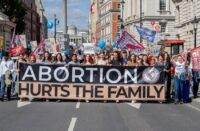
The case has drawn attention to a wider debate about how buffer zone laws should be applied.
Supporters of the restrictions argue that women should be able to access abortion services without facing harassment, intimidation or unwanted attempts to influence their decisions.
Religious freedom advocates, meanwhile, argue that the law must distinguish between conduct intended to intimidate or influence others and the private act of silent prayer.
The distinction is particularly significant because silent prayer may not be visible or audible to other people. The legal question is not simply whether Vaughan-Spruce was present within the restricted area, but whether her conduct meets the requirements of the offence.
The Crown Prosecution Service has previously stated that silent prayer near an abortion clinic does not necessarily amount to a criminal offence in every circumstance, with cases requiring individual assessment.
The outcome of Vaughan-Spruce’s trial could provide further clarity on how the legislation applies to alleged silent prayer within a designated buffer zone.
For now, she remains charged but has pleaded not guilty to all five allegations. The court is expected to hear the case in January 2027.
Please help us to keep on publishing news that brings Hope in Jesus:
>> Donate >> Become a Super Subscriber
VISIT OUR YOUTUBE CHANNEL: https://www.youtube.com/gatewaynews100
COMMENTING GUIDELINES
You are welcome to engage with our articles by making comments [in the Comments area below] that add value to a topic or to engage in thoughtful, constructive discussion with fellow readers. Comments that contain vulgar language will be removed. Hostile, demeaning, disrespectful, propagandistic and off-topic comments may also be moved. This is a Christian website and if you wish to vent against Christian beliefs you have probably come to the wrong place and your comments may be removed. Ongoing debates and repetitiveness will not be tolerated. You will also disqualify yourself from commenting if you engage in trolling.