



By Bafana Modise, National Spokesperson of South African Friends of Israel
South Africans are repeatedly told that the government’s foreign policy is rooted in human rights and solidarity with the oppressed. But when one follows the money, a very different story emerges: one in which ideological posturing takes precedence over the urgent needs of citizens at home.
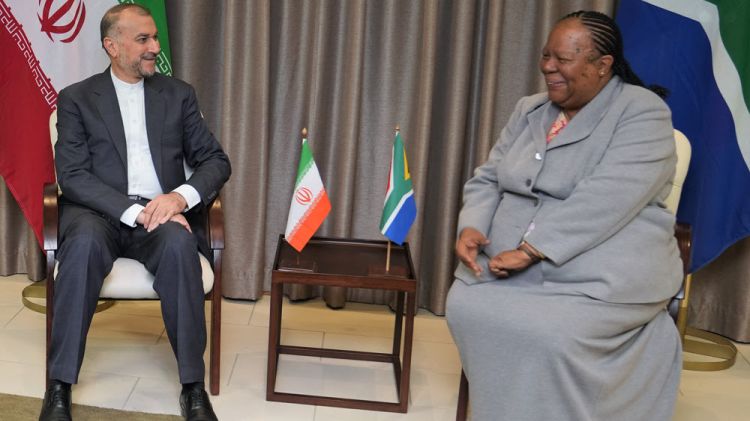
The ANC’s decision to pursue a case against Israel at the International Court of Justice has been framed as a moral stand. In reality, it reflects a deeper alignment with regimes like Iran, whose strategic objective is to isolate and delegitimise Israel globally.
This is not cost-free symbolism. Legal experts estimate that international litigation of this scale costs tens, if not hundreds, of millions of rand when one factors in legal teams, research, travel, and diplomatic coordination. At a time when South Africa faces a fiscal crisis, this raises a simple question: what else could that money have achieved?
Consider housing. According to government benchmarks, a single RDP house costs roughly R200 000 to build. Even a conservative estimate of R100-million spent on international legal action against Israel could have delivered around 500 homes to South Africans living in informal settlements.
Or consider sanitation. The eradication of pit latrines in schools, an ongoing national shame, has been costed at several billion rand, with individual safe sanitation units costing tens of thousands each. Redirecting funds from political litigation could have accelerated this effort, protecting children from preventable harm. For those unfamiliar with these news stories, it is worth noting that several young children drown in their school pit latrines every year in our country.
Given this fact, it is quite unfathomable to think that the ANC government would spend millions at the ICJ, before ensuring that their own children could relieve themselves safely, when using the lavatories (or lack thereof) at school. How does the ANC rationalise such expenditure, when South African mothers send their children to school to receive an education, only for some to be sent back home in body bags, because they drowned in a pit latrine?
Instead, resources have been diverted into a case that does nothing to build infrastructure, create jobs, or improve living conditions: either for South Africans or for Palestinians. Notably, there has been no equivalent financial commitment from the ANC government toward humanitarian aid, bomb shelters, or development projects that could tangibly improve Palestinian lives.
This is the crux of the issue: if the objective were genuinely humanitarian, the spending priorities would look very different.
Israel, for its part, has consistently demonstrated its commitment to protecting its citizens from terrorism, while also facilitating humanitarian aid into conflict zones, even when under fire. The narrative advanced by the ANC ignores this reality, reducing a complex conflict to a simplistic political slogan.
The ideological roots of this approach are not new. The ANC’s historical ties to Soviet-era propaganda frameworks emphasised narrative warfare: shaping perception as a political tool. Today, that legacy appears to have found new expression in alignment with Iranian geopolitical interests. Iran’s strategy is clear: use international institutions, media, and activist networks to wage a campaign of delegitimisation against Israel. By inserting itself into this campaign, the ANC is not championing justice, it is simply amplifying a foreign agenda that has little to do with South Africa’s national interest.
And the cost is not just financial. It is reputational and economic. As South Africa distances itself from key Western partners while embracing controversial alliances, it risks undermining investor confidence, trade relationships, and diplomatic credibility. Sadly, ordinary South Africans pay the price, through lost opportunities, weakened public services, and a government increasingly disconnected from their daily realities.
Foreign policy should serve the people. It should open doors for trade, attract investment, and enhance national security. It should not be a vehicle for ideological crusades that drain resources and divide society. The question South Africans must ask is simple: in a country struggling with unemployment, housing shortages, and failing infrastructure, can we afford this kind of political theatre?
Or more importantly, who truly benefits from it?
Please help us to keep on publishing news that brings Hope in Jesus:
>> Donate >> Become a Super Subscriber
VISIT OUR YOUTUBE CHANNEL: https://www.youtube.com/gatewaynews100
COMMENTING GUIDELINES
You are welcome to engage with our articles by making comments [in the Comments area below] that add value to a topic or to engage in thoughtful, constructive discussion with fellow readers. Comments that contain vulgar language will be removed. Hostile, demeaning, disrespectful, propagandistic and off-topic comments may also be moved. This is a Christian website and if you wish to vent against Christian beliefs you have probably come to the wrong place and your comments may be removed. Ongoing debates and repetitiveness will not be tolerated. You will also disqualify yourself from commenting if you engage in trolling.