

Originally published in Frontpage
Yet another jihadist attack in north Cameroon has led to the kidnapping of two Christians.
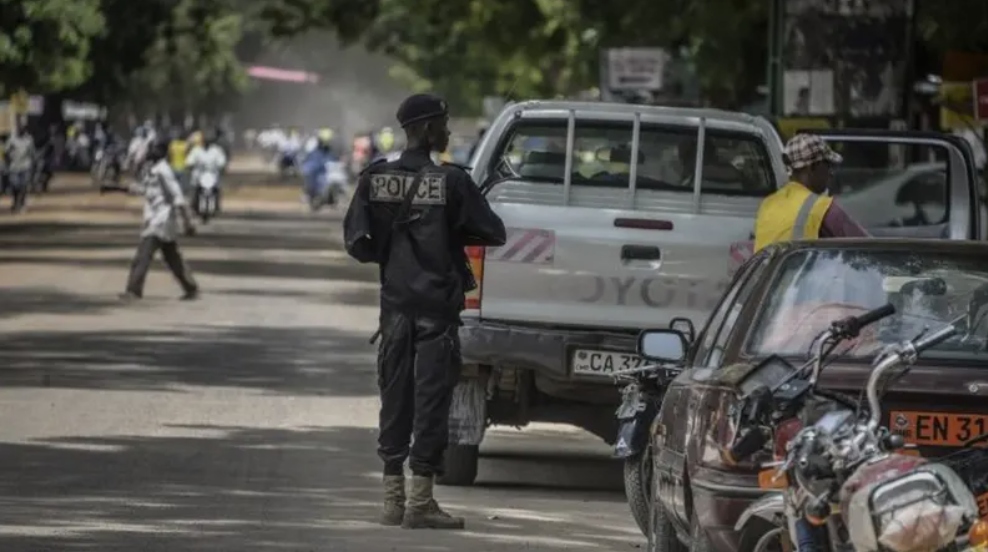
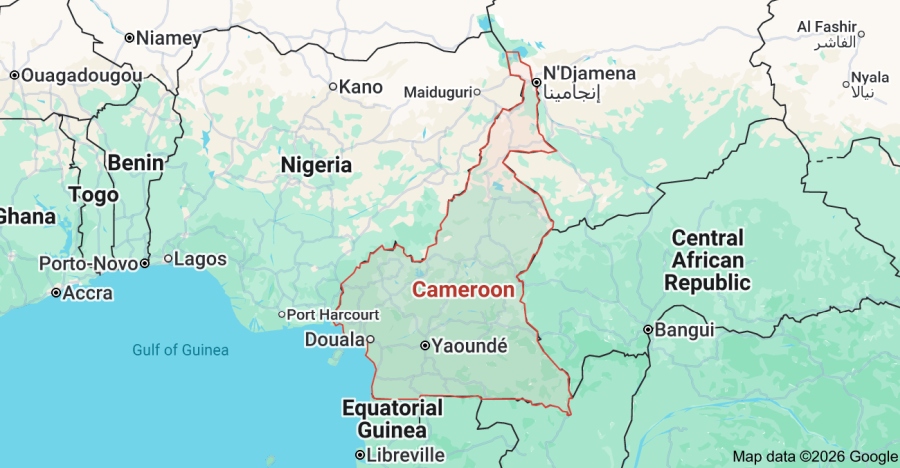
Boko Haram terrorists reportedly abducted the Christians on August 10 when they targeted the village of Mahoula in Mayo-Sava Division, an area notorious for the terror group’s attacks and its splinter operations because of its proximity to the border with Nigeria. The victims come from two different churches.
Jihad is spreading across Cameroon, augmenting the climate of fear that many felt already.
Since 2014, despite ongoing military operations by Cameroon’s security forces, Islamic terrorists have increasingly targeted the wider northern region with kidnappings, raids, looting, destruction of property and mass killings. These jihadist groups aim to establish sharia law and Islamic supremacy.
The Far North Region of Cameroon is predominantly Muslim, unlike the southern and western parts of the country, which are mostly Christian. While Muslims form the majority in the north, the region also includes Christian communities.
Open Doors, an organisation that monitors Christian persecution on a global scale, ranks Cameroon at number 37 on its World Watch List, highlighting the extreme dangers and pressures Christians face in the country: “The Muslims do their trade, live well, get married and do as they wish. But us Christians, we can’t, unless we flee from here,” said Adam from Cameroon, who was kidnapped by Boko Haram. “Today, we flee to one village, tomorrow to another. To date, we are on the run. We are not certain about the places we can live.”
Christians in the north face severe threats, including abductions, forced conversions, and attacks on churches. Terror groups abduct Christian women and girls, forcing them into marriage, sexual slavery, or even using them as suicide bombers. Christian men face the threat of execution, forced labor, or conscription into armed groups. Church leaders, students, and teachers are targets. Schools remain unsafe, as mission schools are attacked and clergy kidnapped.
“In the locality of Amchidé, the church is going through many difficulties,” shared Pastor Babien from the nearby village of Amchidé. “We see regular kidnappings and sexual assaults here. We experience the destruction of the church’s property. We face regular attacks.”
According to a report by the U.S. Commission on International Religious Freedom (USCIRF), Cameroon’s estimated population of 31 million (2024) reflects that Christians make up approximately 66 percent of the country. while Muslims constitute 31 percent, and practitioners of traditional beliefs around four percent. The USCIRF notes: “Religious freedom violations are widespread across the Sahel region of Africa du:e to the presence of violent insurgent groups, fragile and often military-led governments, and societal conflict. Insurgent groups that invoke religion to justify violence—such as the Islamic State in the Sahel Province (ISSP), Jama’at Ahl al-Sunna lid-Dawah wa’al-Jihad (JAS-Boko Haram), and Jama’at Nusrat al-Islam wal-Muslimin (JNIM)— continue to perpetrate serious violations against virtually all religious communities in the region, and they have significantly increased their destructive activity in recent years.”
The findings of 2026 Open Doors research put into perspective the USCIRF’s report: “Christian persecution in Cameroon is intensifying, particularly in the northern regions where radicalization is spreading among Muslim populations. Violence by Boko Haram and similar groups targets Christians through abductions, church burnings, and exclusion from community life…
“Islamic oppression is most visible in the Far North, Adamawa, and parts of the East, where Christians, especially converts from Islam, face severe pressure to renounce their faith. This pressure comes from families, communities, and militant groups like Boko Haram and ISWAP [Islamic State West Africa Province], who exploit weak state presence to enforce radical ideologies. Christians are targeted through abductions, forced conversions, and deadly attacks, resulting in mass displacement and the collapse of Christian-Muslim coexistence. In these regions, oppression has moved beyond social pressure to an existential threat, leaving Christians unable to practice their faith openly.”
Across the country, Christian converts from Islam face the greatest hatred and rejection for their conversion, arising from family and community. Even owning a Bible can provoke violence and attacks against them.
In 2025, Cameroon’s Far North had more terrorist incidents than the seven other Lake Chad Basin regions, the Institute for Security Studies (ISS) reported: “Boko Haram is appointing an increasing number of Cameroonian fighters to senior positions, Institute for Security Studies (ISS) research shows. These commanders play an active part in the group’s resilience by providing it with access to local resources and information on targets for attacks and extortion.
“The trend follows a shift in the location of attacks by the extremist group’s two factions – Islamic State West Africa Province (ISWAP) and Jama’tu Ahlis Sunna Lidda’awati wal-Jihad (JAS). According to ACLED, in 2025 the highest number of incidents occurred in Cameroon’s Far North region compared to the seven other Lake Chad Basin regions affected: Nigeria’s Borno, Adamawa and Yobe states; Lac and Hadjer Lamis provinces in Chad; Cameroon’s North region; and Diffa in Niger.”
“The high level of attacks in Far North stems from ISWAP’s strategy of territorial expansion. Fighters of Cameroonian origin are given a share of power to enable the targeting of people and property in Cameroonian territory.
“These leaders are able to influence internal decision making and ground operations in Cameroon. With their first-hand knowledge of the local context, they can plan and coordinate attacks on their home ground, recruit fighters and ensure logistical support from Cameroon.
“Cameroon’s border regions are of major interest to both ISWAP and JAS. Cornered in Nigeria by the army’s ongoing military offensives including air strikes, the armed groups find refuge in remote areas along the border between Nigeria and Cameroon.
“They plunder nearby Cameroonian communities and launder funds derived from terror activities. Livestock stolen in Nigeria, for example, is generally sold off in Cameroon’s border markets. Busy cross-border trade gives ISWAP and JAS easy access to essential supplies like food, clothing, medicines and fuel. The more areas they can access to obtain resources, the more resilient they become, with local fighters used as scouts.”
Meanwhile, Open Doors has launched the Arise Africa petition, which calls for protection, justice and restoration for the victims of violent persecution in Cameroon and in many places in sub-Saharan Africa. The project aims to raise one million signatures to present to national governments and international organizations, compelling them to “use their power and influence to stop the violence and start the healing.”
Jihad is targeting Africa almost in its entirety. Jihadists murder Christians in Nigeria, Mozambique, the Democratic Republic of Congo, Sudan, Burkina Faso, Niger, Somalia, Ethiopia, Mali, Libya, Chad, and the Central African Republic, amongst other African nations.
Each African nation’s jihad movement has its own name. The main Islamic terror group in Somalia is Al-Shabaab. Jihadists targeting Burkina Faso are Jama’at Nusrat al-Islam wal-Muslimin (JNIM), Islamic State Sahel Province (ISSP) (formerly ISGS), and Ansaroul Islam. In Libya, there is a plethora of jihadist terrorists, some of which are the Islamic State-Libya Province, Ansar al-Sharia, and the Libyan Islamic Fighting Group.
Please help us to keep on publishing news that brings Hope in Jesus:
>> Donate >> Become a Super Subscriber
VISIT OUR YOUTUBE CHANNEL: https://www.youtube.com/gatewaynews100
COMMENTING GUIDELINES
You are welcome to engage with our articles by making comments [in the Comments area below] that add value to a topic or to engage in thoughtful, constructive discussion with fellow readers. Comments that contain vulgar language will be removed. Hostile, demeaning, disrespectful, propagandistic and off-topic comments may also be moved. This is a Christian website and if you wish to vent against Christian beliefs you have probably come to the wrong place and your comments may be removed. Ongoing debates and repetitiveness will not be tolerated. You will also disqualify yourself from commenting if you engage in trolling.