




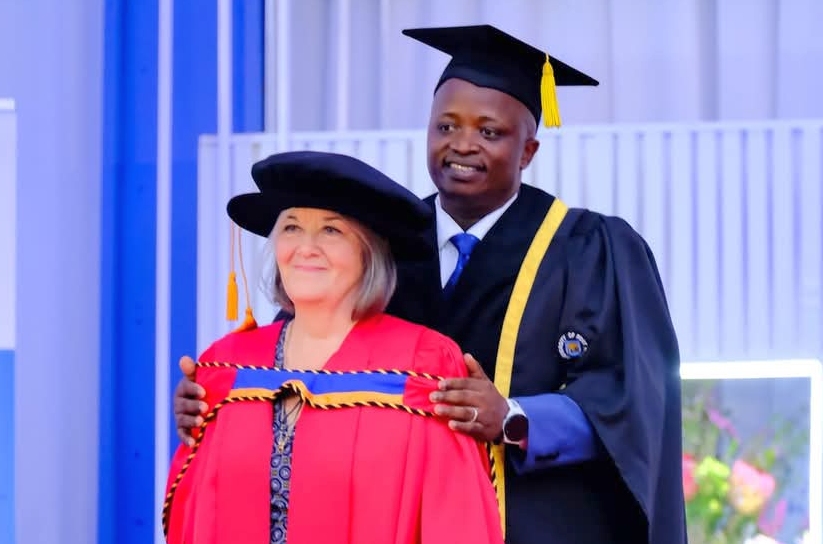
At 67 Dr Gaye Moonieya was the oldest graduate at the University of Fort Hare’s Spring Graduation ceremony at it’s Alice campus earlier this month.
But even more remarkable than earning her PhD in social work in her late sixties was the bold and groundbreaking nature of her doctoral thesis titled Abortion’s hidden victims: women’s narratives of ending their pregnancies and the journey to healing.
Through interviews with 10 women who had previously had abortions her study explores women’s lengthy journeys from grief, guilt and shame towards healing and asks how social workers can better support them.
“I wanted to address the needs of post-abortive women from a social work perspective because there is so much ignorance around abortion. It deeply affects many women and the other side of the story needs to be told,” said Gaye.
“Abortion destroys two lives, the unborn and the mother. It can take many, many years for women to process their grief, shame and guilt. Abortion makes a person feel worthless and out of that many wrong choices are made. Many women become suicidal.
“My goal is to save the lives of the unborn and to help women who are suffering silently to know that there is healing, forgiveness and hope,” she said.
Before she discovered social work, Gaye was a journalist for 13 years. She enjoyed her time in journalism but said: “I am a practical person and I wanted to do more than just write about things that were important to me. I wanted to make a hands-on difference.”
After leaving journalism she founded Sakh’ingomso, a children’s ministry that grew out of her experience with volunteering on a street children project in East London. During that season she prayed with “a brave young woman” who had kept a child conceived in rape. In retrospect, Gaye believes that encounter may have played a part in her decision — decades later — to do her PhD.
She says taking on the PhD 30 years after she completed her Masters “wasn’t my idea. It was really a God idea and it came so unexpectedly.” Taking it on was an act of obedience to God.
She says completing her PhD was a difficult journey. During that time she moved “so many times” to different cities and towns and within cities. During one five months period she lost her mother, two other relatives and two other people close to her. She deregistered from the PhD programme for two years and took it up again in 2024.
“I also faced a lot of opposition. Abortion is such an evil and such a dark subject and people don’t talk about it and people are ignorant. You know, they always raise the thing about abortion being okay when it’s rape. But the research actually shows that women who have an abortion after rape actually suffer more from the abortion than the actual rape.”
Gaye said that over the last two years she has also been enrolled at Charis Bible College where she will be graduating in early November. While Bible college was a challenge, she said: “It has kept me sane and fed me over the past two years and I want to carry on with third year.”
Her PhD research identified several factors that were important in the post-abortion healing process, including being able to speak openly about the experience, acknowledging and processing grief and trauma, self-forgiveness, and drawing hope from faith.
Gaye says one of the concerns raised by her research is the number of women who continue to carry these experiences quietly. She describes silent post-abortive women as “hidden victims” and argues that their experiences need greater attention within social work.
“This was a very personal journey because it was my own story too. I was silenced in unspoken grief and shame for many years.
“There is nothing more powerful than stories and women’s voices need to be heard to counteract the loud public narrative that abortion is your right and it’s simply health care. It’s not. For many women it is a life-changing trauma and loss that defines their lives into before and after,” she said.
Her thesis recommends that abortion be established as a specialty within social work and included in introductory social work textbooks. It also recommends stronger pre-abortion counselling to ensure women have an opportunity to explore their options more fully.
“Social workers need to be sensitised and informed because there are so many women carrying unresolved grief, guilt and shame. It is a missed opportunity to help if we don’t normalise asking questions about a past abortion the same way we ask other questions. It is part of gathering information and can be a way to open a conversation especially with young girls who may turn to suicide, alcohol and drugs or risky sexual behaviour.”
The study is focused not only on the decision to end a pregnancy, but on what happens afterwards, the emotional consequences, the support women receive and the factors that can help them heal.
Her PhD, supervisor Prof John V Rautenbach said: ”The work deserves a wider readership and a number of journal articles are under development.”
Please help us to keep on publishing news that brings Hope in Jesus:
>> Donate >> Become a Super Subscriber
VISIT OUR YOUTUBE CHANNEL: https://www.youtube.com/gatewaynews100
COMMENTING GUIDELINES
You are welcome to engage with our articles by making comments [in the Comments area below] that add value to a topic or to engage in thoughtful, constructive discussion with fellow readers. Comments that contain vulgar language will be removed. Hostile, demeaning, disrespectful, propagandistic and off-topic comments may also be moved. This is a Christian website and if you wish to vent against Christian beliefs you have probably come to the wrong place and your comments may be removed. Ongoing debates and repetitiveness will not be tolerated. You will also disqualify yourself from commenting if you engage in trolling.