



By Bafana Modise, National Spokesperson of South African Friends of Israel
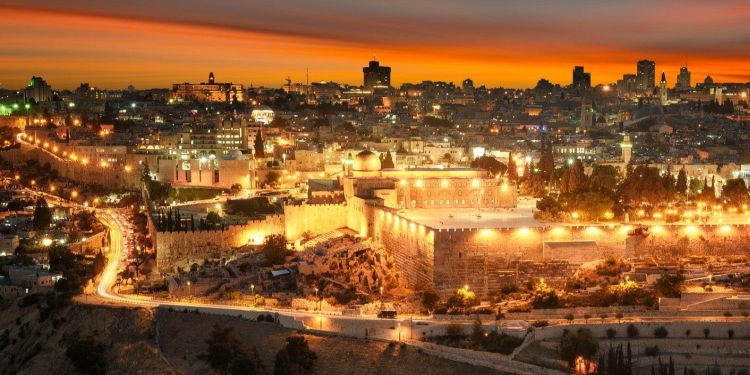
Every year on May 14, Israel commemorates Jerusalem Day, or Yom Yerushalayim, marking the reunification of Jerusalem in 1967 after the Six-Day War. For many around the world, it is a political anniversary. For Jews and Christians, however, the celebration runs far deeper than politics. It is about history, faith, identity, and the enduring connection that lies between readers of the Bible and the city that finds itself at the very centre of our Scripture.
Jerusalem is not simply another capital city. It is arguably the most spiritually significant city in human history. Long before modern politics existed, Jerusalem stood as the heart of biblical civilisation and the spiritual home of the Jewish people. Its story stretches back more than 3 000 years to King David, who established Jerusalem as the capital of ancient Israel around 1000 BCE. His son, King Solomon, would later build the First Temple there: a sacred site where Jews believed the presence of God dwelled among His people.
For Christians, Jerusalem is equally sacred. It is the city where Jesus preached, healed, carried the cross, was crucified, buried, and resurrected. The events that shaped Christianity unfolded in Jerusalem. Without Jerusalem, there is no Easter story, no empty tomb, and no Christian faith as the world knows it today. This is precisely why the connection between Christians and Israel remains so profound. Christianity was born from Jewish soil. Jesus Himself was Jewish. The apostles were Jewish. The Bible’s story is deeply rooted in the land of Israel and in Jerusalem specifically. Supporting the Jewish connection to Jerusalem is therefore not merely a political stance for many Christians, it is recognition of biblical and historical truth.
An important fact to note over Jerusalem is that it has endured conquest after conquest throughout history. The Babylonians destroyed the First Temple in 586 BCE. The Jews later returned and rebuilt the Second Temple, only for it to be destroyed by the Romans in 70 CE. Yet despite exile, persecution, and dispersion across continents, the Jewish people never abandoned Jerusalem. For nearly 2 000 years, Jews prayed daily facing Jerusalem and ended Passover celebrations with the words: “Next year in Jerusalem.”
For many believers, this enduring return to Jerusalem is not merely historical coincidence, but the unfolding of biblical prophecy itself. In Book of Zechariah 8:8, God declares: “I will bring them back to live in Jerusalem; they will be my people, and I will be faithful and righteous to them as their God.” The verse speaks to restoration, and the unbreakable relationship between God and the people of Israel. For Christians who believe in the authority of Scripture, the re-establishment of Jewish life and sovereignty in Jerusalem carries profound spiritual significance. After centuries of exile, persecution, and displacement, the return of the Jewish people to their ancestral capital stands as a powerful reminder that biblical promises endure across generations.
No other people in history have maintained such a continuous spiritual and historical attachment to a city for so long. Over centuries, Jerusalem passed through Roman, Byzantine, Islamic, Crusader, Ottoman, and British control. Islamic conquest in the seventh century transformed much of the city’s governance and religious landscape. Yet even under foreign rule, the Jewish longing for Jerusalem never disappeared. Jewish communities always remained present, despite repeated expulsions and persecution.
Following Israel’s War of Independence in 1948, Jerusalem was divided. Jordan occupied eastern Jerusalem, including the Old City and Judaism’s holiest site, the Western Wall. During this period, Jews were barred from accessing their holy sites entirely. Synagogues were destroyed or desecrated, and Jewish cemeteries vandalised. That reality changed dramatically during the Six-Day War of June 1967. Surrounded by hostile Islamic states openly threatening annihilation, Israel fought a defensive war that reshaped the Middle East. During the conflict, Israeli forces entered and reclaimed the Old City of Jerusalem.
For the first time in nearly two millennia, Jerusalem was reunified under Jewish sovereignty.
The moment became one of the defining events in modern Jewish history. Israeli paratroopers stood before the Western Wall, many weeping openly. The famous declaration rang out across radios and generations alike: “The Temple Mount is in our hands.”
Jerusalem Day commemorates that moment, what many Jews view not as conquest, but as restoration and liberation. For supporters of Israel, 1967 represented the decolonisation of Jerusalem: the return of the indigenous Jewish people to their ancient spiritual capital after centuries of foreign imperial domination. Importantly, under Israeli governance after 1967, Jerusalem became more accessible to all faiths than at any previous point in modern history. Christians, Muslims, and Jews all gained protection and access to their holy sites. Israel preserved religious freedom in the city, which became a remarkable reality considering Jerusalem’s long history of exclusion under various empires.
This reality reflects an important principle found within Christianity itself. In Gospel of Matthew 5:9, Jesus teaches: “Blessed are the peacemakers, for they shall be called the children of God.” Despite Jerusalem’s long and turbulent history, Israel’s reunification of the city in 1967 did not result in the expulsion of other faiths or the destruction of their holy places. Instead, Israel protected access to sacred sites for Jews, Christians, and Muslims alike. For many Christians, this remains a powerful example of coexistence and religious stewardship in one of the world’s most contested cities.
Jerusalem Day should always serve as a reminder that the roots of our Christian faith remain inseparable from Israel and the Jewish people. At a time when misinformation and anti-Israel rhetoric dominate global discourse, Christians have a responsibility to understand the historical and biblical realities surrounding Jerusalem.
One does not need to agree with every Israeli government policy to acknowledge undeniable truths: Jerusalem has been the heart of Jewish identity for over 3 000 years, and the Jewish people are indigenous to the land of Israel. Christianity’s own foundations testify to that reality. Jerusalem is more than disputed territory. It is the living intersection of biblical history, faith, civilisation, and survival. The city has witnessed empires rise and collapse, yet the connection between Jerusalem and the Jewish people has endured every attempt to erase it.
To many Christians, Jerusalem Day is therefore more than a historical anniversary. It is a living reminder that the promises spoken through the prophets still echo through history today. That is why Jerusalem Day matters. And that is why Christians around the world should care.
Please help us to keep on publishing news that brings Hope in Jesus:
>> Donate >> Become a Super Subscriber
VISIT OUR YOUTUBE CHANNEL: https://www.youtube.com/gatewaynews100
COMMENTING GUIDELINES
You are welcome to engage with our articles by making comments [in the Comments area below] that add value to a topic or to engage in thoughtful, constructive discussion with fellow readers. Comments that contain vulgar language will be removed. Hostile, demeaning, disrespectful, propagandistic and off-topic comments may also be moved. This is a Christian website and if you wish to vent against Christian beliefs you have probably come to the wrong place and your comments may be removed. Ongoing debates and repetitiveness will not be tolerated. You will also disqualify yourself from commenting if you engage in trolling.

Since 1992 we have been praying and fasting for Jerusalem and the nation of Israel