

Key religious freedom stakeholders in South Africa have reacted positively to a virtual meeting between religious sector leaders and Parliament’s Portfolio Committee on Cooperative Governance and Traditional Affairs last Wednesday.
Freedom of Religion South Africa says in a briefing memorandum that it is cautiously optimistic after the engagement which it says marked a significant shift in the ongoing dispute between the CRL Rights Commission and South Africa’s faith communities.
“Until now, the CRL’s Section 22 process and its push toward a legislative framework for regulating religion had largely advanced within the CRL’s own institutional space and agenda. On 11 February, that changed. For the first time since the CRL revived its regulatory agenda, Parliament formally convened a multi-stakeholder hearing to examine the concerns raised by faith communities.
“The matter has now moved decisively from a unilateral CRL initiative to parliamentary oversight scrutiny.
“This shift is not cosmetic. The COGTA PC confirmed that it is actively engaging the issue, has sought legal opinion, and will continue consultations before reporting back to the Speaker of Parliament. No endorsement of legislation was given. No mandate for state regulation of religion was affirmed.
Instead, the COGTA PC publicly reaffirmed two core principles:
• Freedom of religion is constitutionally protected, and
• Abuse must be addressed within a constitutional framework,” says FOR SA.
“Another important development was the visible demonstration of cross-faith consensus. The presentations were not confined to one tradition. Christian, Muslim and African Traditional Spirituality representatives all raised concerns. The message was consistent: abuse and criminal conduct must be prosecuted fully and without hesitation, but the creation of a religion-specific regulatory regime is unnecessary and constitutionally problematic.
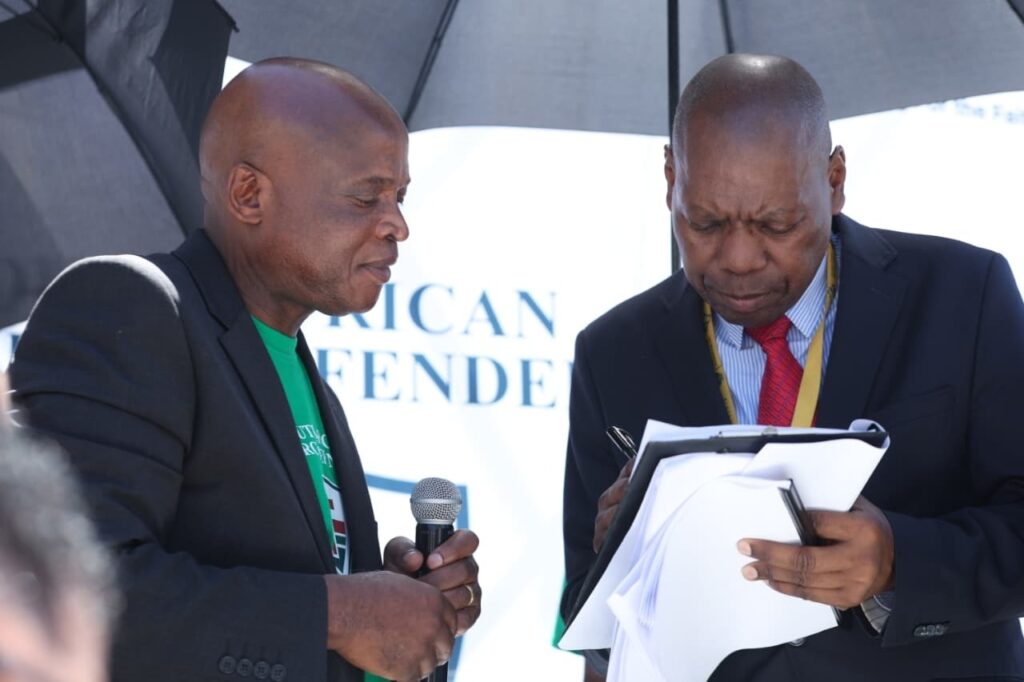
“This firmly dispels the suggestion that opposition to the CRL’s proposals is confined to one sector of the Christian community. It is now clearly a broader constitutional concern shared across traditions. The litigation context is also now politically visible. Two court challenges — one by the South African Church Defenders and another by the Muslim Lawyers Association were referenced before Parliament,” it says.
FOR SA also noted that two court challenges — one by the South African Church Defenders (SACD) and another by the Muslim Lawyers Association (MLA) — were referenced before Parliament. “It is highly unusual for faith communities to litigate against a Chapter 9 institution established to protect their rights. The very existence of these cases signals serious institutional strain. Importantly, Parliament is now formally aware that the Section 22 process proceeds under active legal challenge,” it says.
The briefing also highlights that the fact that after six days of hearings in 2018, Parliament rejected the CRL’s earlier proposals for a legislatively-backed peer review mechanism, was fully ventilated at the Meeting. “The essential question before COGTA PC is simple: what has materially changed since 2018 to justify reopening a path that Parliament previously declined? At the same time, viable alternatives are now formally before Parliament. The Religious Freedom Charter, the collaboratively developed Code of Conduct, the growth of SACOFF – the South African Community of Faith-Based Fraternals and Federations – and other accountability structures, and FOR SA’s detailed Alternative Solutions proposal are all on record.”
In a media statement responding to last week’s virtual engagement, SACOFF president Pastor Bert Pretorius says they left the meeting “encouraged”.
“Not because all differences have been resolved. But because we were heard. And because Parliament reaffirmed a principle that must anchor this national conversation: freedom of religion is constitutionally guaranteed and must be protected — and congregants must equally be protected from abuse,”.
He says: “The Chairperson of the Committee, Dr Zweli Mkhize, emphasised that Parliament’s role at this stage is to determine whether there are adequate areas of common understanding across religious bodies on how to address misconduct — within a framework that respects constitutional rights. This balanced framing is critical. South Africa’s Constitution protects: Freedom of religion and the right of religious communities to practise collectively . These are not privileges granted by the state. They are entrenched constitutional rights. At the same time, SACOFF has consistently condemned harmful and criminal practices within any religious space. Where abuse occurs, it must be addressed decisively — through existing criminal law and the justice system.”
“The debate is therefore not about whether accountability is necessary. It is about how accountability is structured, and whether such structures align with constitutional principles.” he says.
“South Africa’s democracy is strongest when complex matters are addressed through structured dialogue — whether in a parliamentary chamber or across digital platforms. We remain confident that common ground can be found — one that protects congregants from harm, safeguards religious freedom, and strengthens trust between constitutional institutions and faith communities. SACOFF stands ready to collaborate in good faith ensuring accountability and constitutional freedom are not opposing principles. If handled correctly, they reinforce one another — for the good of South Africa, says Pretorius.
Please help us to keep on publishing news that brings Hope in Jesus:
>> Donate >> Become a Super Subscriber
VISIT OUR YOUTUBE CHANNEL: https://www.youtube.com/gatewaynews100
COMMENTING GUIDELINES
You are welcome to engage with our articles by making comments [in the Comments area below] that add value to a topic or to engage in thoughtful, constructive discussion with fellow readers. Comments that contain vulgar language will be removed. Hostile, demeaning, disrespectful, propagandistic and off-topic comments may also be moved. This is a Christian website and if you wish to vent against Christian beliefs you have probably come to the wrong place and your comments may be removed. Ongoing debates and repetitiveness will not be tolerated. You will also disqualify yourself from commenting if you engage in trolling.