

Special report by the African Religious and Traditional Leaders Council (ARTLC) on the National Religious Freedom Dialogue in Durban on October 28
The National Religious Freedom Dialogue placed religious freedom in South Africa at the centre of debate, bringing together religious leaders, traditional leaders, legal practitioners and faith representatives to discuss how to protect freedom of belief, address misconduct and keep vulnerable people safe.
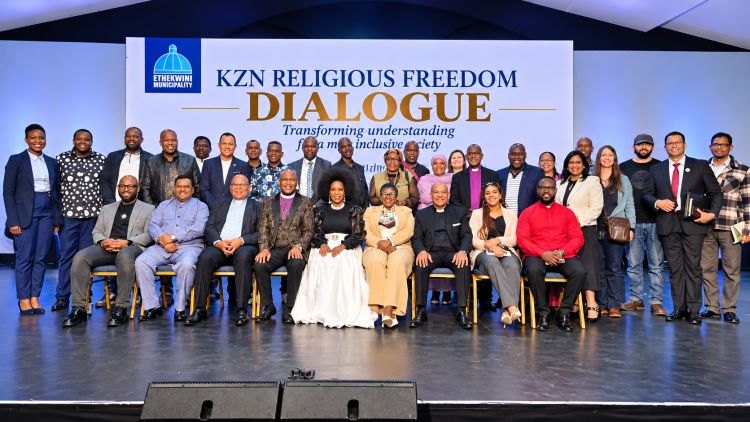
The dialogue took place one day after International Religious Freedom Day and was hosted by the ARTLC, together with eThekwini Metro Interfaith, at World Gospel Impact Church in Wiggins.
The meeting was convened by Bishop Templeton Mbekwa, President of the ARTLC.
Speakers focused particularly on the, CRL Rights Commission’s Section 22 process, and the proposed Draft Self-Regulatory Framework for the Christian Sector, published by the Section 22 Ad Hoc Committee in December 2025. The CRL Commission describes the draft as voluntary and church-led. However, concerns remain among sections of the religious community and legal advocates regarding the consultation process, the framework’s possible scope and its potential impact on religious autonomy.
International Religious Freedom Day is observed annually on October 27 and is associated with the adoption of the United States’ International Religious Freedom Act in 1998. Its wider principle is that people should be free to hold, change and practise their beliefs without discrimination or coercion, whether alone or together with others.
In Durban, speakers linked this principle to religious autonomy, public accountability and the protection of people within faith communities.
Former Section 22 chairperson explains resignation
The special guest speaker was Reverend Professor Musa Xulu, the former chairperson of the CRL Rights Commission’s Section 22 Committee.
Reverend Professor Xulu once again explained his personal reasons for resigning from the Section 22 Committee. He described what he regarded as an intolerable intervention by the CRL Chairperson, Ms Thoko Nonhle Jeanette Mkhwanazi-Xaluva, in the work of the committee.
Professor Xulu further expressed his view that the Section 22 commissioners did not have a meaningful say in the process, despite the CRL Commission being intended to operate independently.
He also expressed his opinion that some of the commissioners did not fully understand what they were doing and that Ms Mkhwanazi-Xaluva was effectively imposing her will on the Section 22 Committee.
Professor Xulu further stated that, in his opinion, Ms Mkhwanazi-Xaluva was the person driving the proposed regulation of the Christian Church.
His comments added to the concerns expressed at the dialogue about the independence of the Section 22 process and the extent to which the CRL Commission should become involved in the internal affairs of religious institutions.
Mkhize outlines parliament and ANC position
Dr Zweli Mkhize, MP and chairperson of Parliament’s Portfolio Committee on Cooperative Governance and Traditional Affairs (COGTA), engaged directly with religious leaders about the Section 22 process.
Dr Mkhize explained that, consistent with the recent, ANC statement, the party distances itself from the perception that regulation of churches is an ANC policy.
He highlighted the ANC’s historical relationship with the Christian Church, pointing out that the ANC had its humble beginnings inside a church in 1912. The African National Congress was established on January 8 1912 at the Waaihoek Wesleyan Mission in Bloemfontein, Free State, and has historically maintained a relationship with churches and Christian communities.
Dr Mkhize also clarified that controversial statements made by CRL Chairperson, Ms Mkhwanazi-Xaluva, were her own statements and that she does not speak on behalf of the ANC, despite what he said has become a widespread perception.
He further confirmed that the Parliamentary Portfolio Committee had received several complaints calling for Ms Mkhwanazi-Xaluva’s removal. He explained that an investigation into those requests was still taking place and that the final decision regarding her position rested with the President, who appointed her.
Dr Mkhize also explained that the delay in the COGTA Portfolio Committee reaching decisions on some of the issues was linked, in part, to legal action brought by the, South African Church Defenders (SACD). He said Parliament was awaiting feedback from its legal team before proceeding further.
Freedom Front Plus supports Christian Church’s position
Grant Marais, Member of the Western Cape Provincial Parliament (MPL) for the Freedom Front Plus (FF Plus), also addressed the issue of proposed regulation of the Christian Church.
Marais stated that the Freedom Front Plus (FF+] supports the Christian Church’s fight against the proposed regulation of the Christian religion.
His contribution added a political-party perspective to the broader discussion, with the dialogue bringing together representatives from religious organisations, civil society and political institutions to discuss the implications of the proposed Section 22 framework.
SALC-FFJ calls for freedom alongside accountability
Vuyo Mkize, KwaZulu-Natal spokesperson for the, Southern African Leaders Coalition for Faith, Freedom and Justice (SALC-FFJ), said religious freedom must go hand in hand with accountability.
She said the coalition did not seek to protect abusers, but wanted to safeguard religious institutions and the people within them.
Mkize warned that the proposed framework could create oversight through a national council, a church register and a Seal of Good Standing.
SALC-FFJ called for authorities to enforce existing laws. It also urged churches to strengthen their own accountability systems and ensure wider consultation.
“We will not be forced to choose between abused congregants and a free Church. That is a false choice. A free Church can still call the police,” Mkize said.
Legal advocates call for inclusive consultation
Lisa Parsee, representing Freedom of Religion South Africa (FOR SA), said the organisation supported the CRL institution but had concerns about the current Section 22 process.
She distinguished voluntary self-regulation from a framework that could involve registration or sanctions.
Pastor Lazarus Pillay, President and Founder of Christian Network International, also called for wider consultation. He said churches needed greater clarity about the process and its mandate in order to build trust.
Speakers propose Church-led accountability
Dr Jonathan Naidoo, representing Unity in Christ and the International Ministers Fellowship, called for partnership with government rather than state control.
He supported church-led codes of conduct, training and transparency, while also calling for protections for women and children and the enforcement of existing criminal laws.
Pundit Suresh Singh, a Hindu faith representative, opposed rules that would require spiritual leaders to pass examinations or obtain formal certification, while also stressing the importance of ethical conduct within religious and cultural institutions.
This contribution widened the discussion beyond Christian communities and reinforced the broader principle that religious freedom must apply to people of different faiths and traditions.
ARTLC leaders and host representatives
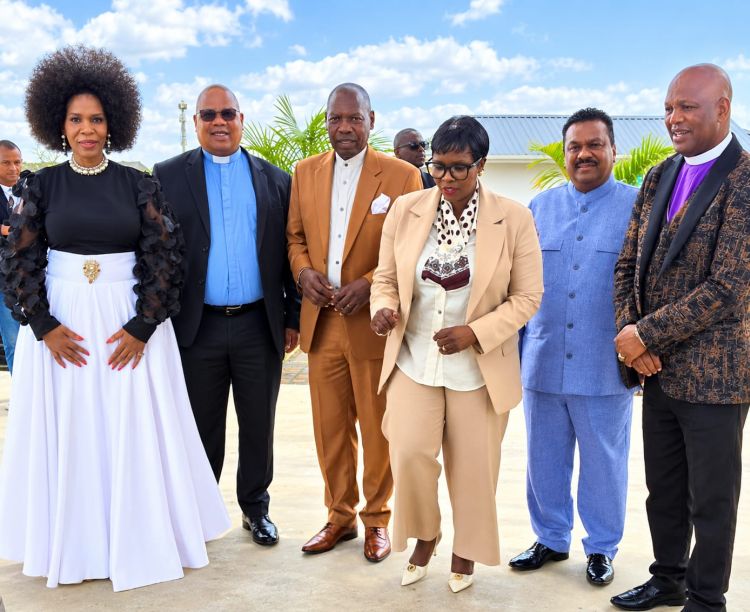
Queen Nosipho Mthembu, ARTLC National Coordinator, attended the dialogue as a representative of the traditional leaders who form part of the ARTLC.
Prophet Zandile Maphumulo represented eThekwini Metro Interfaith, which assisted the ARTLC in hosting the Durban dialogue.
The ARTLC expressed its appreciation to Dr Zweli Mkhize for participating in the engagement in his official capacity as a Member of Parliament and Chairperson of the COGTA Portfolio Committee.
ARTLC pursues a negotiated approach with government
While the South African Church Defenders (SACD) pursued a legal route in challenging the proposed regulation of the Christian Church, the African Religious and Traditional Leaders Council (ARTLC) adopted a different but complementary strategy.
Under the leadership of Bishop Templeton Mbekwa, ARTLC president, the organisation chose to engage directly with government, parliament and relevant political and institutional stakeholders through dialogue, discussions and negotiations.
The ARTLC’s approach is based on the belief that meaningful engagement and constructive negotiations offer an opportunity to address the concerns surrounding the proposed Section 22 framework without unnecessarily deepening divisions between government and the religious community.
Bishop Mbekwa has drawn a comparison between this approach and the negotiated settlement that led to South Africa’s democratic transition in 1994. Just as negotiations and dialogue played a crucial role in the peaceful transfer of political power and the establishment of a new democratic South Africa, the ARTLC believes that dialogue, mutual understanding and negotiation can help resolve the current differences between the Christian Church and government.
The ARTLC’s position is that religious leaders and government should find common ground through meaningful engagement, while respecting constitutional rights, religious independence and the responsibility to protect vulnerable people.
The Durban National Religious Freedom Dialogue, attended by Dr Zweli Mkhize in his official parliamentary capacity, forms part of this engagement strategy.
The ARTLC remains committed to pursuing a negotiated solution through continued engagement with Parliament, government and religious stakeholders across South Africa.
The second leg of a national campaign
The Durban dialogue represents the second leg of a national religious-freedom campaign launched by the ARTLC in Cape Town on October 3 2026.
The campaign is intended to create opportunities for religious leaders, traditional leaders, clerics, legal practitioners and other stakeholders across South Africa to engage directly on the future of religious freedom and accountability.
The ARTLC plans to hold a further National Religious Freedom Dialogue in Gauteng during November 2026, providing local clerics and religious leaders with another opportunity to engage with Dr Zweli Mkhize and other relevant stakeholders.
Balancing religious freedom and accountability
The Durban dialogue reflected a central question: how can society protect freedom of belief while preventing abuse?
Speakers stressed that people and communities must be free to practise their beliefs, but that religious freedom should not be used to shield criminal misconduct or abuse.
The discussion also highlighted differences over the appropriate role of the state and the CRL Rights Commission, as well as concerns about consultation, the Section 22 Committee’s mandate and the possible effects of registration or oversight on religious autonomy.
Speakers agreed that religious freedom and accountability can support each other.
The call was therefore for authorities to address misconduct, protect vulnerable people and enforce existing laws, while religious institutions strengthen their own accountability measures.
The ARTLC believes South Africa can protect freedom of religion or belief while also upholding constitutional rights, safety and human dignity.
The Durban dialogue ended with a call for meaningful consultation, respect for religious freedom and responsible accountability.
Please help us to keep on publishing news that brings Hope in Jesus:
>> Donate >> Become a Super Subscriber
VISIT OUR YOUTUBE CHANNEL: https://www.youtube.com/gatewaynews100
COMMENTING GUIDELINES
You are welcome to engage with our articles by making comments [in the Comments area below] that add value to a topic or to engage in thoughtful, constructive discussion with fellow readers. Comments that contain vulgar language will be removed. Hostile, demeaning, disrespectful, propagandistic and off-topic comments may also be moved. This is a Christian website and if you wish to vent against Christian beliefs you have probably come to the wrong place and your comments may be removed. Ongoing debates and repetitiveness will not be tolerated. You will also disqualify yourself from commenting if you engage in trolling.