


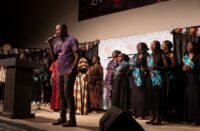

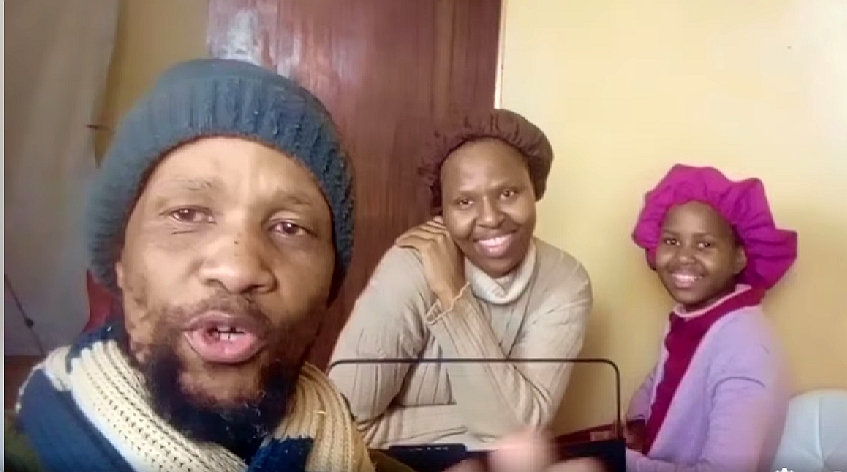
Neziswa Kanju interviewed Luthand Mbengo author of The Name She Carries and gained some deep insights about the weightiness of the marriage covenant and Mbengo’s journey after he had a revelation that “love awakens love”
In Xhosa culture, when a couple wants to get married, the man is required to give lobola to the woman’s family. It is a cultural practice through which a man makes his intentions known by sending representatives from his family to engage the woman’s family in the process of joining the two families.
Before the negotiations begin and the families meet, her uncles call her and ask a seemingly simple but profoundly important question: “Uyabazi na aba bantu?” — Do you know these people? Many young women answer without necessarily thinking about the weight of the question they have just been asked. “Ewe, ndiyabazi! Yes, I know them.” Her answer acknowledges that she knows the purpose of their visit. On the surface that answer is enough but if one were to interrogate. “Uyabazi na ababantu? Do you know these people?” What would be her answer? Does she truly know them?
These are the people whose family she is about to join. She is standing at the crossroads of two generations. As a woman, she is a portal through which one generation is transported into the next. She will carry their name and, in many cases, pass on a sense of identity and belonging to her children. She will be the one teaching them about the family’s traditions and history. Does she know, truly know, the people whose name she will carry?
“Uyabazi na ababantu?” It is a question asked at a pivotal moment in a woman’s life, yet how often do we stop to consider its weight? “When a woman answers “Ewe ndiyabazi…Yes I know them!” Does she really know what she is saying yes to? It is this question that sits at the heart of Luthando Mbengo’s thought-provoking new book, The Name She Carries: What It Means to Give and Carry a Name in the Covenant of Marriage. Mbengo challenges us to look beyond the wedding ceremony, the surname and even the cultural practice itself and ask a much deeper question: What does a man actually give when he gives a woman his name, and what does she carry when she receives it?
“Can two walk together unless they agree?” asks the prophet Amos. Before I walk with you, what exactly am I agreeing to? We live in a wedding-obsessed world where couples can spend months — sometimes years — planning a beautiful wedding without necessarily having the difficult conversations about the marriage that comes afterwards. Two people may enter marriage because they are in love, because their families expect it, because they have reached a certain age, or because a woman feels the pressure of a biological clock. But how many sit down and discuss legacy? What does it mean for a woman to join another family? What does it mean to carry her husband’s name? What does that name represent? What does it offer her — identity, security, belonging? And what does the man offer?
In many African cultures, much of the orientation of a bride, or umakoti, centres on her duties in her new home. The practice of ukukotiza, for example, traditionally prepares a bride for what will be expected of her as she joins her husband’s family. Mbengo believes we need to ask whether we have reduced marriage to what a woman must do for her new family while failing to teach her what she is entering into. “Before asking a woman to honour the name she carries, a man should ask himself what he has actually given her to carry,” he says. It is a question that goes to the heart of his book. For Mbengo, something has quietly gone wrong with the way marriage is understood.
Marriage, he argues, was intended by God to be a blessing and a covenant reflecting something of God’s nature. Yet in the hands of people who do not understand the responsibility attached to it, something intended as a blessing can become a source of pain, degradation and hurt. Some people enter marriage whole and emerge as shadows of themselves. Others look at what marriage has become and simply say: “No thank you. I would rather remain single.” Mbengo believes we have to be honest about that reality — not because marriage itself was a mistake, but because people can distort even God’s blessings.
The book did not begin with Mbengo believing he had marriage figured out. It began with him discovering how much he still had to learn.
Mbengo grew up in Queenstown, where his grandparents lived in the rural areas surrounding the town. His understanding of family and marriage was also shaped by his church, his pastor’s family and his uncle and aunt. He developed a positive view of marriage and wanted to be married. But when he married Yonela, he discovered that wanting marriage and knowing how to be a husband were two very different things. “I desired marriage and believed it to be beautiful, but actually becoming a husband exposed how little I understood about loving another person as a husband ought to love,” he says. He repeatedly returned to Paul’s instruction that husbands should love their wives as Christ loved the Church and gave Himself for her. That sent him searching. How does Christ love the Church? How does He exercise headship? What does He give His bride? What does His love awaken in her? Mbengo and Yonela began reading the Bible from beginning to end, year after year, allowing Scripture to challenge their understanding of marriage. Then he encountered the words in 1 John 4:19: “We love him, because he first loved us.” For Mbengo, those words unlocked something. Love awakens love.
Instead of asking, “How much does my wife love me?” he began asking, “What kind of love am I awakening in her by the way I love her?” His understanding of headship changed. It became less about what a husband is entitled to receive from his wife and more about what he is called to invest in her. What does a man give when he gives his name? This is perhaps the central question of The Name She Carries. We often say, “She took his name.”Mbengo wants us to reverse the question. Before she could take the name, what did he give? A marital name, he argues, should communicate belonging, identity, security, responsibility, authority and covenant. A woman should not simply receive a new word at the end of her name. She should enter a place where she belongs — into a man’s life, home, responsibilities and future. Security is not simply about money. It is faithfulness. Consistency. Emotional dependability. Protection of the covenant. Knowing that your husband will not abandon his responsibilities when life becomes difficult. A surname cannot compensate for the absence of those things.
This is why he believes the name becomes a challenge to the husband before it becomes a demand upon the wife. If he wants his wife to carry his name with honour, he must live in a way that makes the name honourable. Does the name represent safety or fear? Belonging or loneliness? Faithfulness or betrayal? Honour or humiliation? Provision or neglect? These are uncomfortable questions, but they are precisely the questions Mbengo believes husbands need to ask.
There is another element to Mbengo’s argument that is significant during Heritage Month. Our names can function almost like small archives. They connect us to people who came before us — to families, histories, relationships and cultural stories. When someone asks, “Ungowaphi?” — Where are you from? — the answer is often much larger than geography. In many African cultures, your name locates you within a people and a history. That makes the question of a marital name even more significant. It is not merely something printed on an identity document. It can become part of what is carried from one generation to another.
For Mbengo, a woman taking her husband’s name does not mean losing herself. Yonela did not stop being Yonela when she became Mrs Mbengo. “She does not disappear inside the man’s identity,” he says. He distinguishes between receiving a new identity and having an existing identity erased. When he married Yonela, he became something he had never been before — her husband. But that did not erase his history, personality, gifts, education or calling. He believes the same should apply to women. “Unity is not uniformity,” he says. “Marriage joins two lives; it does not require one of those lives to become invisible.” This is also why he believes Christians should examine cultural practices rather than simply defending them because they are traditional. A new name can represent a new relationship and belonging. It should not communicate that the woman’s life before marriage has been abolished. “Transformation is not annihilation,” he says.
Luthando and Yonela Mbengo’s own love story began with a question about intention. Luthando met Yonela through church and music after returning to Queenstown from Johannesburg. Their music director, Mrs Vee, put them together for a musical item. They rehearsed almost every day, and after rehearsals Mbengo was entrusted with walking Yonela home. “Those walks are really where I began to know her,” he recalls. Eventually they exchanged numbers and remained in contact after he returned to Johannesburg. When he later told Yonela that he liked her, her response caught him completely off guard. “Dare not awaken me until you know what you want to do with me, when and how.” She was not interested in emotions without intention. She wanted to know where the relationship was going.
Mbengo responded by telling her that he was making plans to make her his wife. He explained his vision, what he intended to do and the timeframe he had in mind. She agreed. Eighteen years later, the words she spoke at the beginning of their relationship have acquired a deeper meaning for him. When he later discovered the principle that love awakens love, he realised that Yonela had challenged him from the beginning not to awaken something in her unless he understood what he intended to do with the love he was asking her to give.
Do you know the man whose name you are about to carry? Does he understand what he is giving you? Does he understand what his name should mean? And, perhaps most importantly, if he invokes Christ as the model for his headship, does he understand that Christ’s authority was expressed through self-giving love? For Mbengo, the answer begins with another question directed not at the woman, but at the man: What are you giving of yourself that awakens love, trust, security and belonging in her? That is the question behind The Name She Carries. And it is a question that may be bigger than a surname, bigger than a wedding and, ultimately, bigger than the two people standing at the altar. It is a question about what we choose to carry forward.
Please help us to keep on publishing news that brings Hope in Jesus:
>> Donate >> Become a Super Subscriber
VISIT OUR YOUTUBE CHANNEL: https://www.youtube.com/gatewaynews100
COMMENTING GUIDELINES
You are welcome to engage with our articles by making comments [in the Comments area below] that add value to a topic or to engage in thoughtful, constructive discussion with fellow readers. Comments that contain vulgar language will be removed. Hostile, demeaning, disrespectful, propagandistic and off-topic comments may also be moved. This is a Christian website and if you wish to vent against Christian beliefs you have probably come to the wrong place and your comments may be removed. Ongoing debates and repetitiveness will not be tolerated. You will also disqualify yourself from commenting if you engage in trolling.