


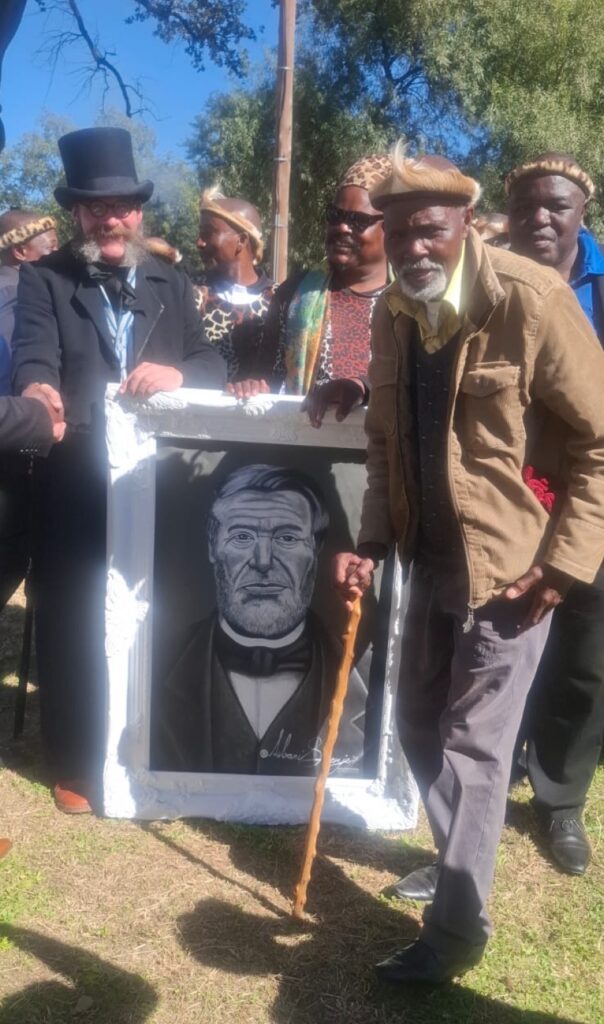
I have known that the town of Potchefstroom carries layers of South African memory, but the extent of it only became clear to me two weekends ago. I was invited to be part of a reconciliation weekend between Matabele (or Ndebele) and Afrikaner communities, an event marked by prayer, repentance, storytelling and fellowship. Through it, I became aware of a painful chapter of nineteenth-century South African history.
During the 1830s and 1840s, as Afrikaner Voortrekkers moved northwards into the interior, they encountered the kingdom of King Mzilikazi, founder of the Ndebele nation. Competition over land, cattle, political authority and survival led to violent conflicts. Raids, reprisals and massacres became part of the frontier reality of the time. Also, this was a period shaped by state formation in southern Africa and the collapse or displacement of weaker communities caught between expanding powers.
This is the part of South African history that surprised me the most. I did not know that the Ndebele, who are now primarily settled in Zimbabwe, once roamed and controlled parts of South Africa, living alongside other Nguni groups. Now I understand why some have Zulu-sounding last names, such as Khumalo, Dube, Mzila, etc., and perhaps even speak better Zulu than I do. In fact, Google reveals that the Matabele or Ndebele “originated as a Zulu chiefdom that split from King Shaka in the early 19th century under leader Mzilikazi”, which is important information in view of the current ructions in South Africa against African foreign nationals.
Back to the reconciliation weekend. One of the most remembered incidents was the killing of members of the Liebenberg family after they entered territory controlled by Mzilikazi. The event remains etched into Afrikaner historical memory as a tragedy and a warning about the dangers and uncertainties of the frontier. For the Ndebele kingdom, however, this incident was experienced as resistance against territorial encroachment and threats to political sovereignty.
This recent reconciliation weekend did not attempt to erase those differences in interpretation. Instead, it sought to acknowledge them honestly while creating space for healing. At a koppie on a privately owned farm near Potchefstroom — the site associated with the Liebenberg killings — participants from both communities planted a cross together. The symbolism was unmistakable. A place once associated with bloodshed became, at least for a moment, a place of shared mourning and shared humanity.
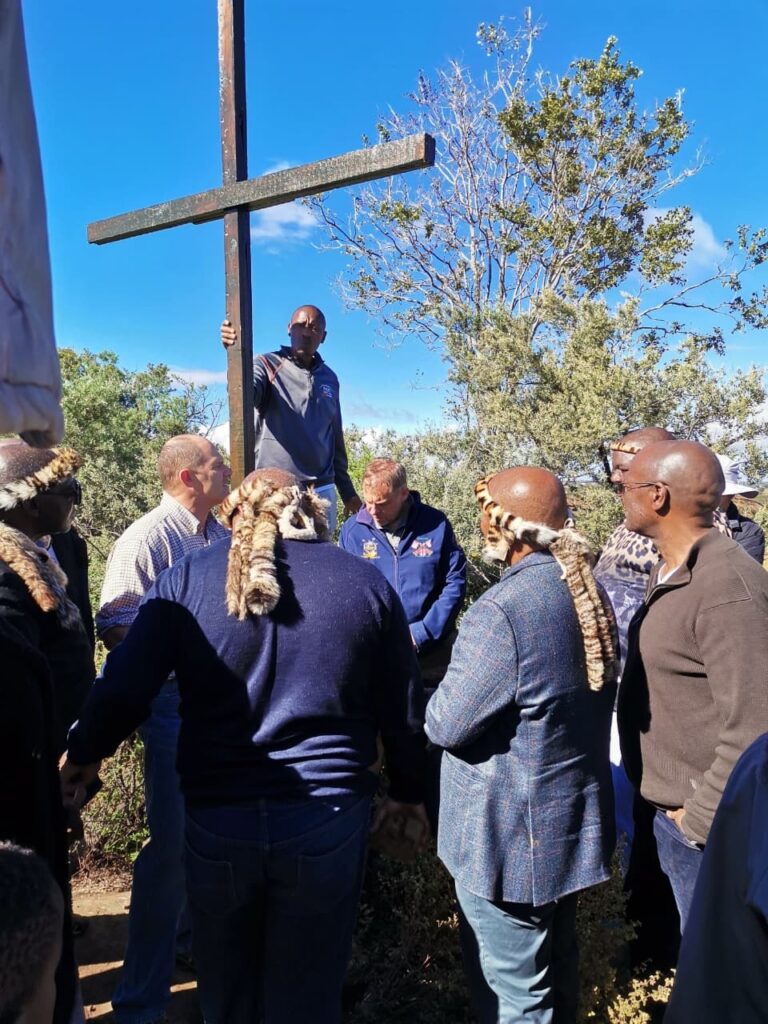
The group also visited the graves of the Liebenberg family and other historical sites connected to the conflict. Many of these places now lie quietly within private farmland, largely unknown to the broader public. Yet they remain fragments of a living memory that still shapes identity, culture and historical consciousness.
Throughout the weekend there were prayers, confessions, symbolic exchanges of gifts and conversations over shared meals. Speaking of which, this event took place because of an incidental conversation between Simon Brace and Ndumiso Khumalo while they were both attending the Wilberforce Academy in Stanford, South Africa. Khumalo is a pastor in Bulawayo and a member of the Mthwakazi royal family. Mthwakazi is the traditional name for the historic Northern Ndebele Kingdom established in the 19th century by King Mzilikazi in what is now southwestern Zimbabwe.
Brace, who resides in Potchefstroom and was the host of the event, is originally from Rhodesia, Zimbabwe’s name before gaining independence from British rule. He candidly shared about his family being on the wrong side of history, citing a relative who served in the Rhodesian army’s special forces, fighting against liberation groups led by Robert Mugabe and Joshua Nkomo, and another who ran a slave boat.
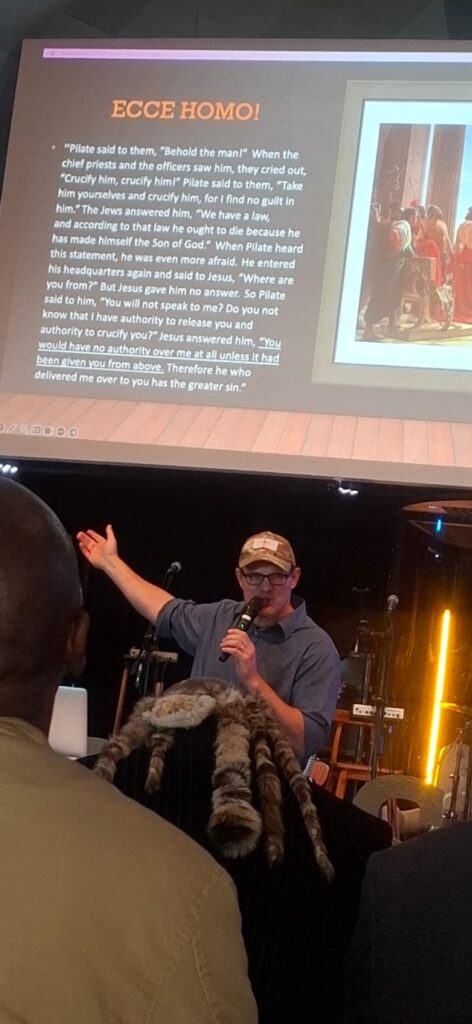
Other stories were told not only about the past, but also about inherited perceptions, fears and misunderstandings that continue to influence relationships today. Moss Ntlha, who now heads up The Evangelical Alliance of South Africa (TEASA), spoke of being deprived of studying engineering because of apartheid-era education policies. The irony for him was that his first bible was from a white person, the very people that propped up the system of apartheid while he was growing up.
Another person who was on hand to share about the power of reconciliation and peace-building was John Mathuhle of Senekal, a town that was almost torn apart after the murder of 21-year-old farm manager Brendon Horner. Horner’s killing pushed the town to the brink of civil war and Mathuhle found himself wedged between EFF supporters and local farmers who were baying for each other’s blood. He testified of seeing God’s hand shift things around following days of intense prayer he and others initiated.
The delegates also got to watch The Threatened Miracle of South Africa’s Democracy, a historical documentary based on the book A Witness For Ever by Michael Cassidy. The documentary is a reminder of the complexity, pain and beauty of what happened in South Africa in the run-up to the 1994 elections.
The event culminated in a braai at the President Pretorius Museum – a fittingly South African ending to a deeply emotional gathering. Marthinus Wessel Pretorius was the first president of the South African Republic (ZAR). He built the house between 1857 and 1860 on his farm in Potchefstroom, around the time the Ndebele nation would have been in the area.
What stood out most was not the attempt to deny history, but the recognition that history still lives inside communities long after the battles themselves have ended. South Africa often speaks about reconciliation in national terms, usually in connection with apartheid. But many older historical wounds remain unresolved beneath the surface. Conflicts between African kingdoms and Voortrekkers, tribal wars, land dispossession, colonial conquest and racial segregation all overlap in complicated ways.
Different communities preserve different memories, heroes and grievances. These memories shape how people understand land, belonging, justice and identity even today. In many ways, history is never really past. It survives in family stories, monuments, surnames, languages, cultural pride and inherited suspicion. Entire communities can carry emotional memories of events that happened generations before they were born.
That is partly why events like this reconciliation weekend matter. They create opportunities for people to encounter one another not merely as historical enemies or stereotypes, but as human beings capable of grief, dignity and forgiveness. There was also something distinctly Christian about the gathering. The planting of the cross, the prayers of repentance and the emphasis on fellowship reflected a belief that reconciliation requires more than political agreement. It requires moral humility — the willingness to acknowledge pain, confront historical wrongdoing and extend grace across inherited divides. Importantly, the weekend did not solve history. No single gathering can do that. The historical tensions surrounding land, conquest and memory in South Africa remain deeply contested.
But reconciliation does not begin when every disagreement disappears. It begins when people choose to listen before defending themselves and when they recognise that historical suffering is not exclusive to one group alone. Hence, the Ndebele people today are largely disenfranchised. Owing to their migratory patterns under Mzilikazi, some are scattered throughout Southern Africa, while the rest are absorbed into Zimbabwe. They are primarily located in Matabeleland, a region that has historically been an opposition stronghold. As a result, the Ndebele have faced historical marginalisation, political exclusion, and economic neglect, stemming from past atrocities like the 1980s Gukurahundi massacres.
In a world increasingly shaped by polarisation and historical resentment, a small gathering on farms and gravesites around Potchefstroom may seem insignificant. Yet perhaps this is how reconciliation often begins — not through grand political speeches, but through ordinary people sharing stories, meals, tears and prayers in places where history once divided them.
Please help us to keep on publishing news that brings Hope in Jesus:
>> Donate >> Become a Super Subscriber
VISIT OUR YOUTUBE CHANNEL: https://www.youtube.com/gatewaynews100
COMMENTING GUIDELINES
You are welcome to engage with our articles by making comments [in the Comments area below] that add value to a topic or to engage in thoughtful, constructive discussion with fellow readers. Comments that contain vulgar language will be removed. Hostile, demeaning, disrespectful, propagandistic and off-topic comments may also be moved. This is a Christian website and if you wish to vent against Christian beliefs you have probably come to the wrong place and your comments may be removed. Ongoing debates and repetitiveness will not be tolerated. You will also disqualify yourself from commenting if you engage in trolling.

Thank you so much for sharing that. i realize how ignorant i am of so much that has taken place in history and seriously impacted lives. But how wonderful that it can be brought out into the open and honestly dealt with to bring about understanding and reconciliation. Bless you
Afrika, you are a gift from God, thank you for capturing the happenings at Potchestroom with such accuracy. We have a history with the Afrikaners, but we are eager to turn it into a great and a Godly relationship. The Wilberforce Academy and our special friends in the institution have encouraged and supported us all the way. We look forward to their continued guidance.
We appreciate this historical dimension and we are going to learn more of such narratives meant to unpack history while allowing for reconciliation and establishment of a history that brings about love than enmity
Thank you Afrika, it was a pleasure sharing the day with people who love God YHWH and trust in His son for righteousness & forgiveness.
A small hope that racial and cultural barriers can be broken down and united as differing tribes under the King of kings, Lord of lords & Eternal High Priest Jesus Christ to align to God’s will for unity and submission to Him (YHWH) who is glorious & holy!
Be well as we fight and build for the Kingdom of God!